
Nitrogen blanketing pressure gauge selection is a low-pressure tank instrumentation task, not a simple catalog choice. The gauge may read only a few mbar or kPa above atmosphere, yet the reading affects product oxidation control, regulator troubleshooting, conservation vent behavior and operator safety around inert gas. This guide explains how to specify the pressure range, sensing element, mounting point and RFQ data while keeping tank venting and oxygen-deficiency hazards in the engineering review.
What nitrogen blanketing pressure gauge selection means
Nitrogen blanketing pressure gauge selection starts with the purpose of the blanketing system. Nitrogen blanketing, also called tank inerting, adds inert gas to the vapor space of a storage tank so oxygen ingress, moisture pickup and flammable vapor formation are reduced. The gauge is a local indication of vapor-space pressure; it is not the blanketing valve, the conservation vent, the flame arrester or the oxygen safety system.
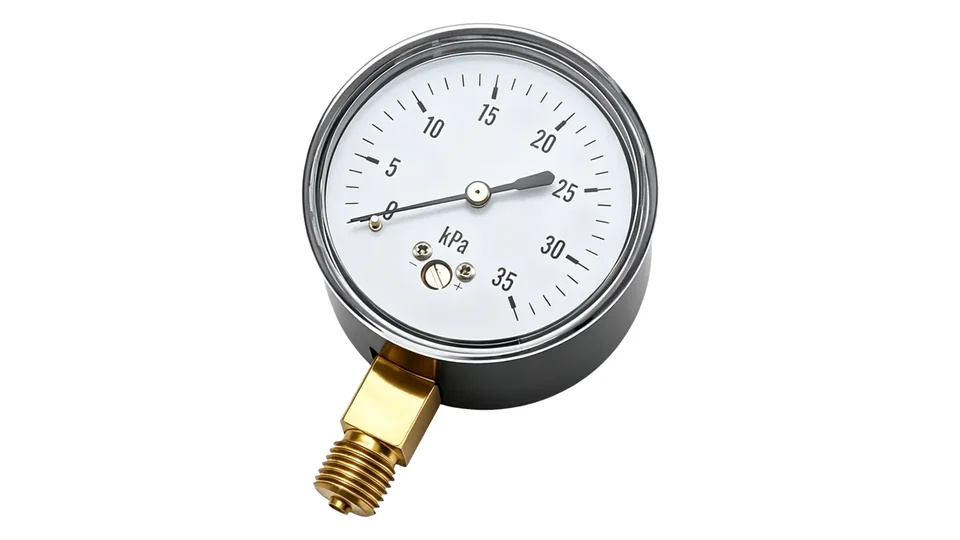
Because many blanketed tanks operate close to atmospheric pressure, the instrument may need to show mbar, inH2O, mmH2O or kPa with enough resolution for operators to see small changes. A normal industrial Bourdon tube gauge may be too coarse for this duty. Low-pressure capsule or diaphragm gauges are often reviewed when the range is in the 0-60 kPa class or lower.
Use the gauge to help answer practical questions: is the tank holding slight positive pressure, is the regulator feeding nitrogen, is the vent lifting, is there unexpected vacuum during pump-out, and is maintenance seeing a stable local indication?
Comparer les manomètres basse pression ->Vérifiez capsule, membrane et raccordement→Define the low-pressure range before choosing the gauge
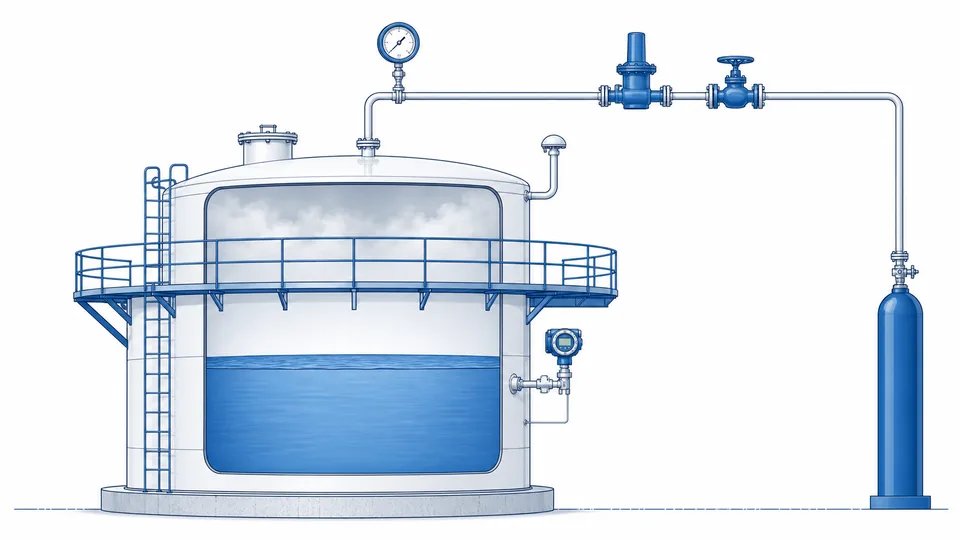
Do not start from the nitrogen supply cylinder pressure or plant nitrogen header pressure. The gauge installed on the tank or blanketing line should match the controlled tank pressure, vent setting, possible vacuum exposure and any hydrostatic or cleaning condition that can reach the gauge connection.
| RFQ input | What to state | Selection effect |
|---|---|---|
| Normal blanketing pressure | Expected mbar, inH2O, mmH2O or kPa range in the vapor space | Determines whether a capsule, diaphragm or other low-pressure element is needed. |
| Vent and vacuum settings | Pressure-vacuum vent opening points and emergency venting philosophy | Prevents treating the gauge as a tank protection device. |
| Nitrogen supply condition | Regulated pressure after blanketing valve, not only cylinder pressure | Separates supply-side troubleshooting from tank pressure indication. |
| Process movement | Filling, pump-out, thermal breathing, cleaning and transfer rate | Explains why the reading changes during operation. |
| Medium exposure | Vapor, solvent, condensate, corrosive fumes or sticky product | Controls wetted material, seal and clogging review. |
API Standard 2000 is commonly referenced for atmospheric and low-pressure storage tank venting. It covers normal and emergency venting causes such as liquid movement, thermal effects and operational upsets; a local gauge can support observation, but vent sizing and tank protection remain an engineered design responsibility. For a public copy of an older edition, see API 2000: Venting Atmospheric and Low-Pressure Storage Tanks.
Capsule, diaphragm or Bourdon tube for nitrogen blanketing pressure gauge selection
For slight positive pressure, the sensing element matters. A Bourdon tube is robust for many industrial pressure ranges, but it may not give useful resolution at very low tank blanketing pressures. A capsule element uses two corrugated diaphragm halves and is intended for low-pressure indication. A diaphragm gauge can also be used for low ranges, especially when the vapor or condensate may be less clean.
Manogauge product data lists capsule pressure gauge options with a 0-60 kPa range, Ø60-150 mm dial size, SS / brass material choices, ±1.6 / 2.5% accuracy classes and G/PT/NPT 1/4 connections. For dirty or corrosive vapor paths, compare diaphragm pressure gauge options and confirm wetted materials with the stored product.
The product range is a starting point only. Solvent vapor, food oil, resin monomer, wet nitrogen, acid fumes or explosive-area requirements can change the final instrument specification. Do not assume compatibility from low pressure alone.
Envoyer les données d’inertage du réservoir ->Incluez unité de pression, réglages d’évent, vapeur et point de montage→Install the gauge where the reading has diagnostic value
A tank blanketing system can have several pressure points: plant nitrogen header, regulator inlet, regulator outlet, tank vapor space, conservation vent line and emergency vent area. A supply-side gauge can show whether nitrogen is available, while a vapor-space gauge shows whether the tank is actually holding the intended slight pressure. These readings answer different questions.
Install the vapor-space gauge where condensate cannot fill the socket and where operators can read it without standing in a possible inert-gas release path. Use an isolation valve only when site procedure prevents accidental closure from hiding a dangerous condition. If maintenance needs remote reading or alarms, a pressure transmitter may be required in addition to a local dial gauge.
For thread and sealing basics, review the pressure gauge thread connection guide. If the line can see pulsation, sudden pressure spikes or vacuum, compare the pressure gauge overpressure protection guide before selecting accessories.
What a nitrogen blanketing pressure gauge cannot prove
A gauge cannot prove that oxygen concentration is safe, that the tank is correctly inerted, that the vent is sized, that the flame arrester is clean, or that a confined-space atmosphere is breathable. Nitrogen is colorless and odorless, and it can displace oxygen without warning. The U.S. Chemical Safety Board has documented fatal nitrogen asphyxiation incidents and stresses that inert gas can make process equipment and nearby breathing zones hazardous; see the CSB Hazards of Nitrogen Asphyxiation safety video page.
For this reason, oxygen monitoring, ventilation, entry permits, lockout practices and confined-space procedures must be handled separately from gauge selection. OSHA guidance also treats oxygen-deficient atmospheres as a recognized hazard; the gauge reading is not a substitute for atmospheric testing.
A stable blanketing pressure also cannot prove product quality. Oxidation control, moisture control, vapor emissions and flammability risk depend on tank design, gas purity, venting, operating sequence and process chemistry. The final design should be approved by the responsible process, safety or tank engineer.
RFQ checklist for nitrogen blanketing pressure gauge selection
A useful RFQ for nitrogen blanketing pressure gauge selection should include the stored product, tank type, normal blanketing pressure, vent and vacuum settings, possible vacuum exposure, nitrogen supply pressure after regulation, vapor temperature, condensate risk, hazardous-area requirement, dial size, accuracy need, connection thread, mounting position, wetted material and certificate requirements.
- State whether the gauge is on the tank vapor space, regulator outlet, nitrogen header or vent line.
- Provide the pressure unit expected by operators: mbar, inH2O, mmH2O, kPa, psi or dual scale.
- Confirm whether vapors are dry, wet, solvent-rich, corrosive, sticky, food-contact or oxygen-sensitive.
- Specify whether the instrument is for local observation only or part of an alarmed monitoring loop.
- Keep tank venting, hazardous-area classification and confined-space safety under the site engineer’s review.
Manogauge, based in Zhejiang, China, supplies low-pressure capsule gauges, diaphragm gauges and stainless steel pressure gauge options for OEM and export projects. Good nitrogen blanketing pressure gauge selection keeps the local indication readable while making its limits explicit.
Key takeaways
- Nitrogen blanketing pressure is usually a low-pressure vapor-space indication, not a supply-cylinder pressure reading.
- Capsule or diaphragm gauges are often more readable than high-range Bourdon gauges for mbar or kPa tank service.
- A gauge supports troubleshooting but does not prove vent sizing, inerting quality or breathable atmosphere.
- RFQs should include tank pressure, vent settings, vapor chemistry, mounting point, materials and safety constraints.
Часто задаваемые вопросы
What range is typical for a nitrogen blanketing pressure gauge?
Many tank blanketing applications are specified in mbar, inH2O, mmH2O or low kPa rather than high psi or MPa. The exact range must follow the tank design pressure, blanketing valve setting and pressure-vacuum vent settings.
Is a capsule gauge better than a Bourdon tube gauge for tank blanketing?
Often yes for very low pressure because a capsule element gives more usable pointer movement at small pressure changes. A Bourdon tube may still be suitable on higher-pressure supply or regulator points.
Can a tank pressure gauge replace oxygen monitoring?
No. Nitrogen can displace oxygen without odor or color. A pressure gauge only shows local pressure; it does not measure oxygen concentration or prove that the atmosphere is safe to breathe.
Where should the nitrogen blanketing gauge be installed?
Install it at the point you need to diagnose: vapor space for actual tank pressure, regulator outlet for blanketing valve behavior, or supply header for nitrogen availability. Avoid condensate traps and unsafe reading positions.
What should be included in an RFQ for a blanketing gauge?
Include tank type, stored product, normal pressure, vent and vacuum settings, nitrogen pressure after regulation, vapor temperature, condensate or corrosion risk, hazardous-area requirement, dial size, accuracy, thread, materials and certificates.