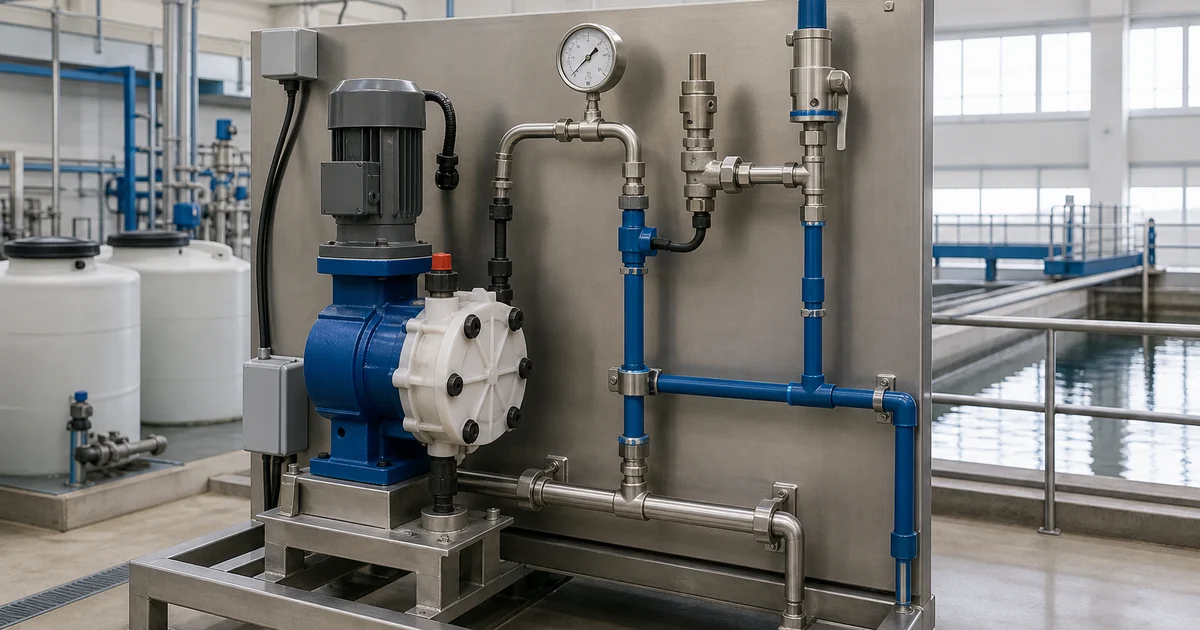
A chemical dosing skid pressure gauge is a local diagnostic instrument installed around a metering pump discharge, backpressure valve, relief line or injection point. In water and wastewater treatment it helps operators see blocked injection quills, failed check valves, air locking, crystallizing chemicals and abnormal backpressure before dosing accuracy is lost. This guide explains how to select the pressure range, wetted materials, diaphragm seal, pulsation protection and installation point without treating a chemical feed skid like an ordinary clean-water pump.
What a chemical dosing skid pressure gauge tells you
Chemical dosing skid pressure gauge selection starts with understanding the measuring point. On a metering pump skid, pressure is not only a process value; it is a troubleshooting signal. Rising discharge pressure can indicate a blocked injection quill, closed isolation valve, crystallized chemical or plugged check valve. Low or unstable pressure can point to air binding, a damaged pump diaphragm, empty day tank or failed backpressure valve.
Operator training material from the Pennsylvania Department of Environmental Protection describes common chemical feed accessories such as calibration chambers, pressure relief valves and backpressure valves. See the PA DEP chemical feed training module for this system context. A pressure gauge is useful only when it is installed where these components affect the reading.
For water treatment, cooling towers, pH adjustment, hypochlorite dosing, coagulant dosing and wastewater odor control, specify the gauge after defining chemical, concentration, normal discharge pressure, maximum pump pressure, relief valve setting and injection point backpressure.
Compare Chemical-Resistant Gauge Options ->Review stainless steel, diaphragm seal and corrosion-resistant choices→Choose the pressure range from pump and relief conditions
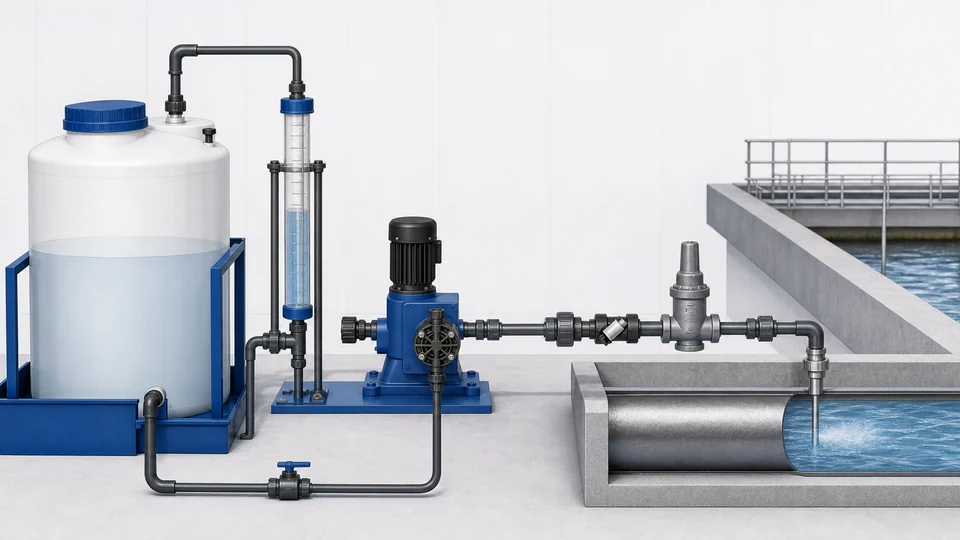
The best range is not simply the highest pressure printed on the pump datasheet. Start with normal discharge pressure, expected backpressure, maximum pump capacity, relief valve setting and any hydrostatic test or blocked-line scenario. Normal operating pressure should sit in a readable part of the dial, while the upper range must tolerate the credible abnormal pressure before the relief device opens.
| Condition | Gauge selection question | Why it matters |
|---|---|---|
| Normal dosing | Where does pressure sit during stable feed? | Keeps the needle readable for daily checks. |
| Blocked injection point | What pressure appears before relief opens? | Prevents gauge overload during a common failure mode. |
| Backpressure valve | Is the gauge upstream or downstream of the valve? | The same skid can show different pressure at different points. |
| Pulsating metering pump | Is a snubber, dampener or remote mount needed? | Reduces pointer flutter and movement wear. |
If the system can see sharp pulsation, review the pressure gauge snubber and pulsation protection guide instead of masking the issue with an unreadably high range.
Wetted materials and diaphragm seals for chemical feed service
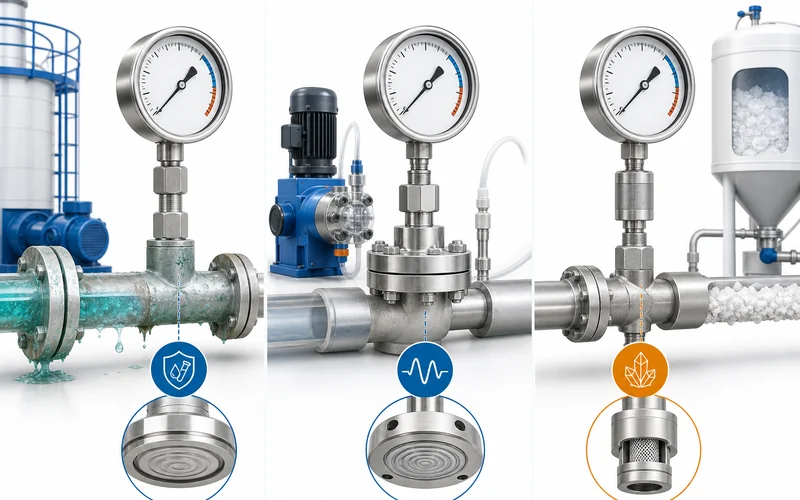
Chemical compatibility is the second filter. Dilute sodium hypochlorite, ferric chloride, alum, caustic soda, sulfuric acid, antiscalant and polymer solution do not behave the same way. Confirm the wetted socket, Bourdon tube, diaphragm, gasket and fill fluid with the chemical concentration and temperature. Do not infer compatibility from stainless steel alone.
A diaphragm seal or isolating diaphragm gauge may be needed when the medium is corrosive, crystallizing, viscous, dirty or unsafe to enter a Bourdon tube. The seal separates the process chemical from the pressure element, but it also adds response limits, fill-fluid considerations and cleaning requirements. For product families, compare isolating diaphragm gauge options and stainless steel pressure gauges.
For food, potable water or high-purity chemical dosing, ask the project engineer whether material certificates, cleaning method, elastomer grade or a named standard is required. Those requirements must be confirmed by the manufacturer; they should not be invented from a catalog photo.
Send Dosing Skid Pressure Data ->Include chemical, concentration, pump pressure and relief setting→Installation points on a dosing skid change the diagnosis
One chemical dosing skid may need more than one pressure point. A gauge immediately after the pump tells you pump discharge behavior. A gauge before a filter or injection quill helps diagnose plugging. A gauge across a filter or strainer can show maintenance demand. A gauge downstream of a backpressure valve may not show pump stress clearly.
Keep the gauge visible from the operating side, isolated by a clean compatible valve, and protected from chemical spray. Avoid low pockets where crystals or sludge settle into the socket. For outdoor skids, confirm case material, ingress protection, sun exposure and winterization. For vibrating pump frames, a short remote line or damped arrangement can be more reliable than a gauge mounted directly on a vibrating discharge fitting.
Thread choice and sealing practice are also part of the selection. If the skid uses NPT, BSP, G or metric threads, specify the exact connection and orientation. The pressure gauge thread connection guide explains why thread families should not be mixed on chemical service piping.
What the gauge cannot prove by itself
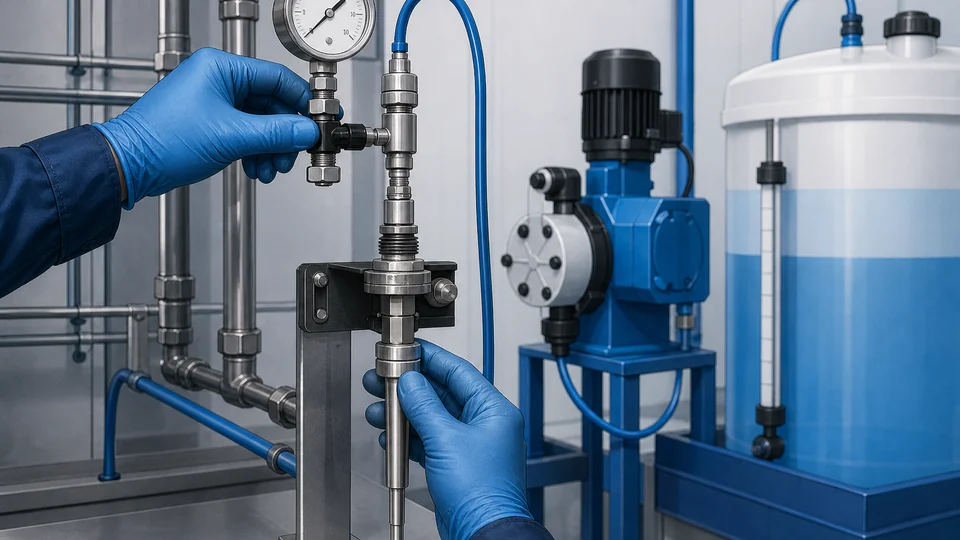
A local gauge cannot prove dosing accuracy, chemical concentration, pump stroke calibration, residual chlorine, pH endpoint or regulatory compliance. It also cannot prove that the relief valve is sized correctly or that the injection point will remain clean. Treat the gauge as one diagnostic layer within the chemical feed system.
Do not rely on a steady pressure reading alone. Pair it with calibration column tests, pump stroke settings, chemical consumption records, flow signal, residual analyzer data and routine inspection of check valves and injection quills. A stable but wrong backpressure can still produce underfeed or overfeed if the pump, valve or injection point is misapplied.
For hazardous chemicals, high concentration acids, sodium hypochlorite decomposition risk, confined chemical rooms or pressure above the skid supplier limit, final selection should be checked by the responsible process or safety engineer.
RFQ checklist for chemical dosing skid pressure gauge selection
A useful RFQ for chemical dosing skid pressure gauge selection should include the chemical name, concentration, temperature, normal discharge pressure, maximum pump pressure, relief valve setting, injection point pressure, pulsation severity, desired dial size, connection thread, installation orientation, wetted materials, seal requirement and certificate requirement.
- State whether the gauge is for hypochlorite, coagulant, caustic, acid, antiscalant, polymer or another reagent.
- Confirm whether the gauge sees clean liquid, crystals, sludge, gas pockets or periodic flushing.
- Specify if a diaphragm seal, snubber, pressure dampener, remote mount or isolation valve is expected.
- Provide any site rules for potable water contact, corrosion resistance, documentation or maintenance access.
With these details, a supplier can recommend a readable, chemically compatible and maintainable pressure gauge instead of guessing from pump size alone.
Key takeaways
- A dosing skid gauge is a diagnostic instrument, not proof of dosing accuracy by itself.
- Select range from normal pressure, blocked-line pressure and relief valve setting.
- Chemical compatibility must include socket, Bourdon tube, diaphragm, gasket and fill fluid.
- Gauge location relative to the pump, backpressure valve and injection point changes the meaning of the reading.
Часто задаваемые вопросы
Where should a chemical dosing skid pressure gauge be installed?
Install it at the pressure point you need to diagnose: immediately after the metering pump for discharge behavior, before the injection quill for plugging, near a filter for maintenance, or around the backpressure valve when valve performance is the concern.
Do chemical dosing pumps need a snubber before the pressure gauge?
Many metering pumps create pulsating discharge pressure. A snubber, dampener, remote mount or liquid-filled arrangement may be needed, but the choice must be compatible with the chemical and maintenance practice.
When is a diaphragm seal needed on a dosing skid gauge?
Use a diaphragm seal when the chemical is corrosive, crystallizing, viscous, dirty or unsafe for direct Bourdon tube contact. Confirm diaphragm material, gasket, fill fluid and temperature limits.
Can one pressure gauge confirm chemical dosing accuracy?
No. The gauge helps diagnose pressure conditions, but dosing accuracy also depends on pump calibration, stroke setting, chemical level, flow signal, check valves, injection point condition and analyzer feedback.
What information should be included in an RFQ?
Include chemical name and concentration, temperature, normal and maximum pressure, relief valve setting, injection point pressure, pulsation severity, connection thread, wetted materials, seal requirement and certificates.