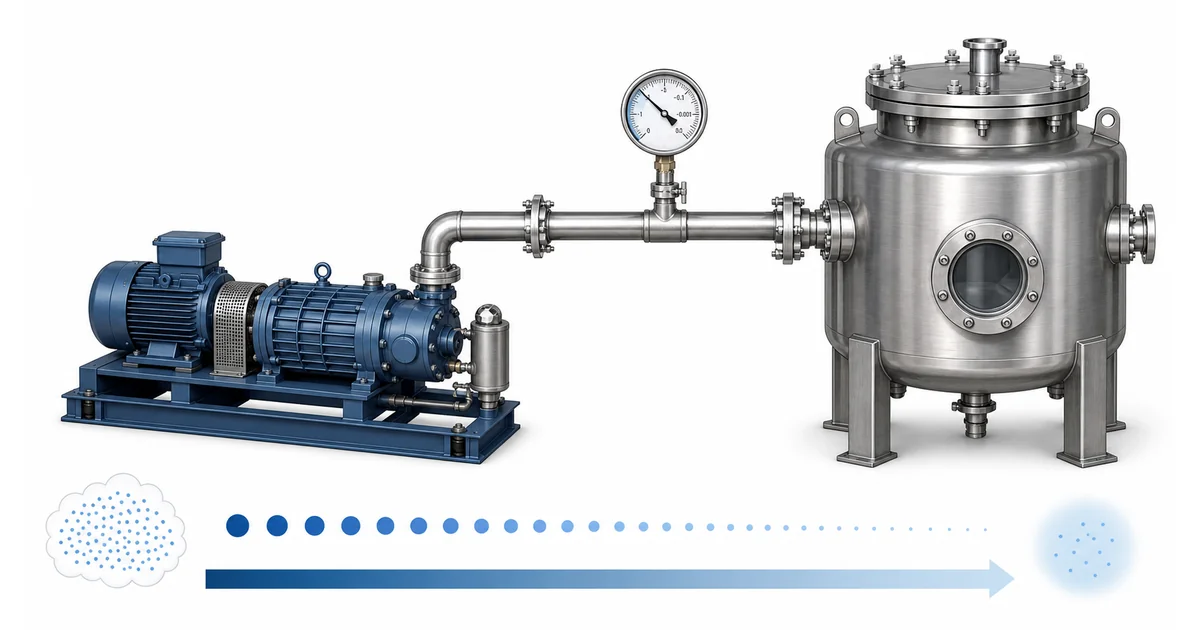
Vacuum pressure gauge selection is different from ordinary positive-pressure gauge selection because the operator is reading pressure below atmosphere, often near a vacuum pump, chamber, filter, condensate trap or suction line. This guide explains how to specify a rough-vacuum dial gauge without confusing negative gauge pressure, absolute pressure and process performance.
What vacuum pressure gauge selection really means
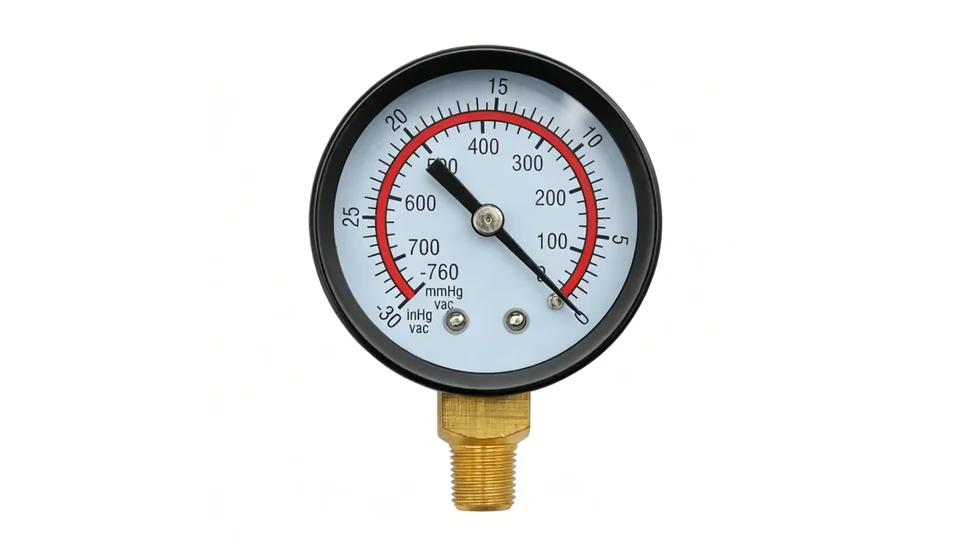
Vacuum pressure gauge selection is the process of matching a local dial instrument to pressure below atmospheric pressure. A common mechanical vacuum gauge reads negative gauge pressure, often from 0 to -760 mmHg or 0 to -30 inHg. That is useful for rough vacuum service, but it is not the same as an absolute vacuum gauge used for fine vacuum, high vacuum or laboratory metrology.
The distinction matters because vacuum can be reported in mmHg, inHg, kPa, mbar, Torr or absolute pressure units. NIST's Pressure and Vacuum Measurements reference explains that units such as torr, bar and atmosphere are defined in relation to the pascal. For purchasing, the safest RFQ states both the instrument scale and the process expectation.
Manogauge product data lists radial and axial vacuum pressure gauge options with a -760 mmHg to 0 range, Ø40-100 mm dial size, dry case, steel construction and G/PT/NPT 1/4 connection. Those are product data points, not a universal approval for every vacuum system.
Compare Vacuum Gauge Options ->Check radial, axial, range and connection choices→Start with vacuum range, reference and normal operating zone
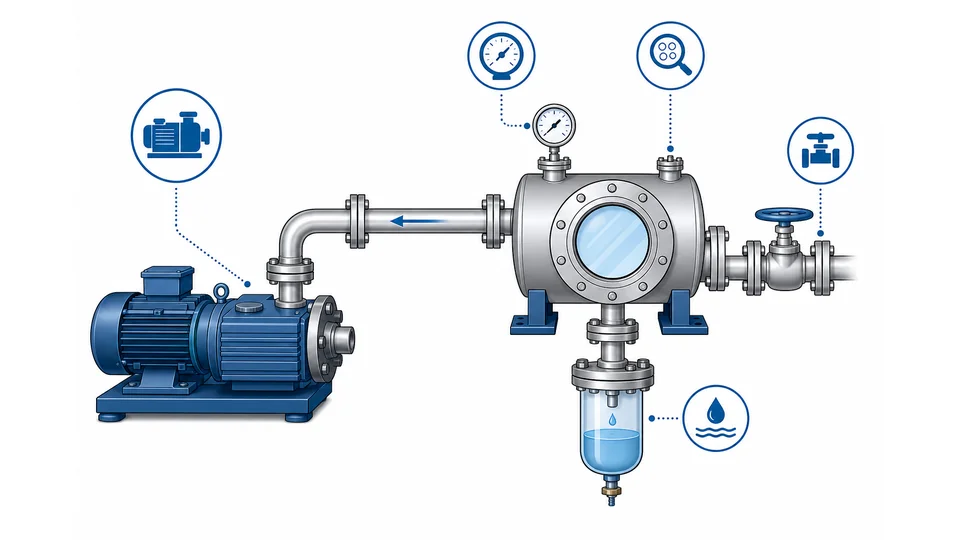
The first decision is whether the operator needs a simple local vacuum indication or a true absolute pressure value. A dial vacuum gauge is helpful when the process operates in rough vacuum and the question is practical: is the pump pulling down, is the suction line blocked, is a chamber leaking, or is a filter adding restriction?
| RFQ input | What to state | Why it matters |
|---|---|---|
| Pressure reference | Gauge vacuum, compound pressure, or absolute pressure | Prevents comparing -mmHg readings with mbar(a) requirements. |
| Normal vacuum level | Typical working range and acceptable pull-down limit | Keeps normal readings in a readable part of the dial. |
| Maximum positive exposure | Startup, cleaning, nitrogen purge, or accidental pressure | A pure vacuum gauge may not tolerate positive overpressure. |
| Medium | Air, water vapor, solvent vapor, gas mixture, dust or condensate | Controls material, clogging and condensate protection decisions. |
| Mounting point | Pump inlet, chamber, trap, filter, suction header or panel | The reading only represents local pressure at that point. |
If the line can swing from vacuum to positive pressure, specify a compound gauge rather than forcing a vacuum-only instrument into a duty it was not designed to survive.
Choose the measuring point before choosing the dial
Vacuum systems can show different pressure at the pump inlet, chamber, long suction header, filter, condensate trap and process vessel. A gauge directly on the pump may look healthy while the chamber still has a leak or a blocked line. A gauge on the chamber may be better for process observation, while a pump-inlet gauge is useful for pump protection and maintenance checks.
For wet service, do not place the gauge where liquid can collect in the socket. Use a higher takeoff, isolation valve or trap arrangement where the process design requires it. Dusty vacuum lines, resin vapors, food powders and wastewater off-gas can plug a small pressure connection, so maintenance access matters as much as the dial range.
For broader installation background, compare Manogauge's pressure gauge installation best practices and pressure gauge thread connection guide.
Send Vacuum Application Data ->Include pressure reference, medium, mounting point and units→Rough vacuum monitoring around pumps, traps and chambers
A rough vacuum gauge is common on packaging machines, vacuum dryers, degassing tanks, suction filters, pump skids, holding chambers and service panels. In these applications, the local dial supports operator checks, troubleshooting and maintenance. It does not replace a calibrated absolute pressure transmitter where the process recipe or validation record requires absolute pressure.
Match the connection thread and mounting style to the panel or pipework. Radial bottom connection suits many upright pipe takeoffs; axial back connection can be useful on panels or compact equipment faces. Confirm whether the gauge must be read from a walkway, inside a cabinet, or during maintenance only.
When vibration from the pump is severe, support the takeoff or consider remote mounting. If the process has pulsation, sudden valve closure or accidental positive pressure, review protection separately through the pressure gauge overpressure protection guide.
What a vacuum gauge cannot prove
A local vacuum gauge cannot prove that the process chamber is leak-tight, dry, clean or at the same pressure as the gauge port. It cannot prove pump capacity, seal condition, ultimate pressure, drying endpoint or sterility. It also cannot distinguish every cause of poor vacuum: leaks, blocked filters, condensate, pump wear, closed valves and wrong operating sequence can all create similar readings.
For freeze drying, pharmaceutical vacuum, semiconductor tools, high-vacuum coating or validated processes, the final instrument type should be specified by the responsible process engineer. A mechanical vacuum gauge is usually a local indication and maintenance tool, not the primary proof of validated vacuum performance.
Do not infer compatibility from a product photo. Solvent vapor, corrosive gas, oxygen service, food contact, sanitary design, hazardous area and calibration certificate requirements must be confirmed from real project data before ordering.
RFQ checklist for vacuum pressure gauge selection
A useful RFQ for vacuum pressure gauge selection should state the service, pressure reference, normal vacuum range, possible positive pressure, medium, vapor or condensate risk, thread standard, mounting orientation, dial diameter, accuracy need, case material, wetted material, vibration, outdoor exposure and certificate requirement.
- State whether the gauge is for a pump inlet, chamber, suction filter, condensate trap, vacuum packaging machine, dryer or panel.
- List required units such as mmHg, inHg, kPa, mbar or Torr, and clarify whether readings are gauge or absolute.
- Confirm whether a vacuum-only, compound or absolute instrument is required.
- Describe condensate, dust, solvent vapor, corrosive gas or cleaning fluid exposure.
- Ask the manufacturer to confirm the exact range, thread, material and documentation for the actual model supplied.
Manogauge, based in Zhejiang, China, supplies industrial pressure and vacuum gauge options for OEM and export projects. A good vacuum pressure gauge selection decision keeps the gauge readable, serviceable and honest about what local vacuum indication can and cannot prove.
Key takeaways
- A mechanical vacuum gauge usually reads negative gauge pressure, not absolute pressure.
- The measuring point can change the diagnosis as much as the dial range.
- Wet, dusty or solvent service needs protection against clogging and condensate.
- A local vacuum gauge supports checks; it does not validate chamber leak tightness or process endpoint by itself.
Часто задаваемые вопросы
Is a vacuum pressure gauge the same as an absolute pressure gauge?
No. A common mechanical vacuum gauge reads pressure below local atmosphere as negative gauge pressure. An absolute gauge references zero pressure and is required when the process specification is in mbar(a), Torr absolute or similar absolute units.
When should I choose a compound gauge instead of a vacuum gauge?
Use a compound gauge when the line can see both vacuum and positive pressure during startup, purge, cleaning or upset conditions. A vacuum-only gauge may be damaged by positive overpressure.
Where should a vacuum gauge be installed?
Install it at the point the operator needs to understand: chamber pressure for process observation, pump inlet for pump health, or filter/trap points for maintenance. Avoid low pockets where condensate can fill the gauge socket.
Can a -760 mmHg to 0 gauge measure high vacuum?
No. That range is for rough local vacuum indication. High-vacuum or validated processes normally need absolute vacuum instruments selected by the process engineer.
What information should be in a vacuum gauge RFQ?
Include pressure reference, normal vacuum level, possible positive pressure, medium, condensate or dust risk, connection thread, mounting direction, dial size, accuracy need, materials and certificate requirements.