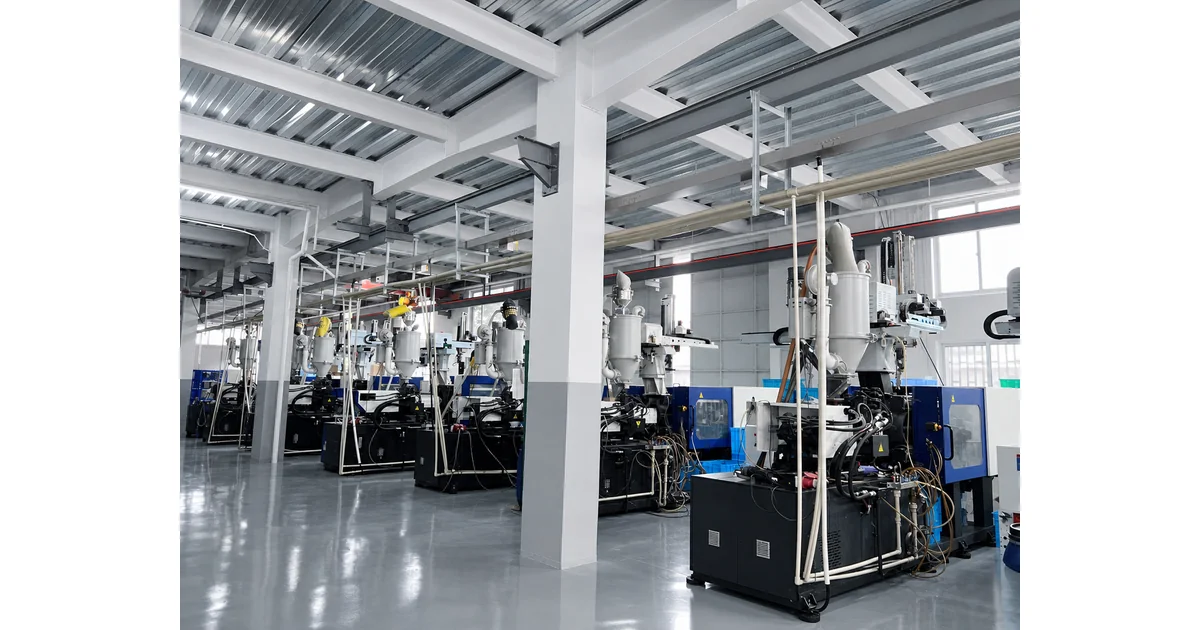
Pulp and paper pressure gauge selection means choosing local pressure instruments for stock preparation, pulp screening, paper machine approach flow, steam dryers, coating kitchens and chemical dosing systems. In a mill, the pressure value is rarely a simple utility number. It can reveal pump loading, screen plugging, steam header stability, coating filter restriction or a closed valve before product quality and uptime are affected.
What pulp and paper pressure gauge selection has to prove
Pulp and paper pressure gauge selection starts with the medium and the diagnostic purpose. Pulp stock is a fibre slurry, coating colour can be abrasive or viscous, steam carries temperature risk, and chemical lines may contain caustic, acid, bleach, starch, dye or retention aid. A gauge that works on clean water may plug, corrode or read slowly when installed on these services.
Industry application notes for paper production commonly describe severe media such as abrasive sludge, chemicals and high temperature. VEGA, for example, lists pulp digesters, pulpers and coating processes as pressure measurement applications in the paper industry; see its paper industry instrumentation overview. The useful buyer question is therefore not “what pressure range is printed on the dial?” but “what failure mode should this point reveal?”
For a paper mill pressure gauge, final specification should be confirmed against the mill piping class, process medium, cleaning practice and safety rules. Local indication helps operators, but it does not replace flow, consistency, level, temperature or quality measurements.
Review Diaphragm Seal Gauge OptionsExplore 143+ industrial gauge models→Measurement points across stock preparation, screens and steam
Stock preparation and approach-flow systems often need paired pressure readings. A pump suction gauge helps identify starvation or a blocked chest outlet. A pump discharge gauge shows pump loading. A pressure difference across a screen, strainer or filter can indicate plugging before flow falls enough to disturb the paper machine.
| Mill area | Typical pressure question | Instrument concern |
|---|---|---|
| Stock chest and fan pump | Is suction stable and is pump discharge normal? | Vibration, fibre build-up, readable range |
| Pressure screen | Is the basket plugging or rejects load rising? | Paired gauges or DP method, cleanable taps |
| Headbox approach line | Is the feed pressure stable enough for process control? | Do not confuse local indication with control signal quality |
| Steam dryer header | Is steam pressure available and safely reduced? | Siphon or cooling leg, temperature rating |
| Coating or starch kitchen | Is a filter, nozzle or feed line restricting? | Viscosity, abrasion, diaphragm seal need |
A single stable pointer cannot prove flow through a screen or uniform sheet quality. Use the gauge reading with pump amps, valve position, consistency data, flowmeter readings and operator inspection.
Diaphragm seal pressure gauge choices for pulp slurry
A diaphragm seal pressure gauge uses a flexible diaphragm and fill fluid to keep the process medium out of the Bourdon tube or sensing element. In pulp slurry pressure monitoring, that separation can be important because fibres, fillers, coating solids or scale can pack into a small gauge socket and isolate the instrument from real process pressure.
Use a flush or extended diaphragm arrangement where the line contains fibres, coating colour, sludge, black liquor residue or crystallizing chemical. The diaphragm material, gasket, fill fluid and connection geometry must be checked against temperature, cleaning chemicals and abrasion. A seal is not a cure for every installation problem: it can add temperature limits, slower response and maintenance needs.
For Manogauge product families, compare isolating diaphragm gauges for dirty or corrosive services and stainless steel pressure gauges for cleaner water, air or utility positions. Catalog data lists isolating diaphragm gauge range options up to 0-60 MPa, Ø40-100 mm dial sizes, ±1.6% accuracy and flange or threaded connections; confirm the exact model before ordering.
Prepare a Paper Mill Gauge RFQOur engineers respond within 24 hours→Range, materials and accessories for a paper mill pressure gauge
Range selection should keep normal operating pressure in the readable middle part of the dial while allowing for pump shutoff pressure, relief settings, steam reduction pressure and cleaning cycles. For pulsating pump discharge, vibration from stock pumps or pressure swings around screens, consider liquid filling, remote mounting, a damped line or a snubber only when clogging risk has been reviewed.
Wetted material selection depends on actual service. 316L stainless steel can be a good starting point for many water and utility points, but it should not be assumed compatible with bleach chemicals, high-chloride water, black liquor, acidic cleaning, caustic service or coating additives. For steam, a siphon or cooling leg protects the gauge from direct high temperature, but the arrangement must be installed so condensate protection actually works.
Thread and mounting details matter in maintenance-heavy mills. Specify NPT, BSP, G or metric thread exactly, define bottom or back connection, and keep the gauge visible from the operator side. The pressure gauge thread connection guide explains why near-fit thread families are a sealing risk, especially around chemical and steam systems.
What the gauge cannot prove in pulp and paper service
A pressure gauge is local evidence, not a full process analyzer. It cannot prove fibre consistency, coating solids, steam dryness, chemical concentration, paper basis weight, product moisture or final sheet quality. It can also hide a problem if the process tap is plugged, the isolation valve is closed, the snubber is clogged, or the diaphragm seal has lost fill fluid.
For critical safety or quality control, use the gauge as one field signal within a documented measurement strategy. A high-pressure steam line, corrosive chemical, black liquor service or rotating-machine location needs engineering review before selecting accessories. Do not invent certificates or safety claims from a catalog image; request drawings, material statements and calibration documents where the project requires them.
Manogauge is a Zhejiang, China manufacturer operating under ISO 9001 quality management with export experience, but the installed specification still belongs to the mill engineer or system integrator because pulp and paper pressure gauge selection depends on real media, piping class and site maintenance practice.
RFQ checklist for pulp and paper pressure gauge selection
A useful RFQ for pulp and paper pressure gauge selection should describe each measurement point before asking for a price. State whether the gauge is for stock slurry, white water, steam, condensate, coating colour, starch, caustic, acid, bleach chemical, compressed air or hydraulic service.
- Provide normal pressure, maximum pressure, pump shutoff pressure, relief setting and test pressure where available.
- State medium, temperature, solids or fibre content, viscosity, cleaning chemicals and whether the tap may plug.
- Specify dial size, accuracy class, case material, wetted material, process connection, mounting orientation and visibility requirement.
- Confirm whether a diaphragm seal, siphon, cooling leg, isolation valve, remote line, snubber or liquid-filled case is allowed.
- Ask the supplier to state what the selected gauge cannot prove without flow, consistency, temperature or quality data.
With those inputs, a supplier can recommend a maintainable paper mill pressure gauge instead of guessing from pipe size alone.
Separate clean utility points from fibre-bearing process points. Steam, compressed air and seal-water services may accept a conventional gauge after range and temperature review, while pulp stock, white water and coating fluids can plug a small pressure port or foul a direct sensing element. Compare the pressure before and after screens, pumps and cleaners, and specify whether the reading is intended for trend, alarm or a maintenance decision. A flush diaphragm seal can keep fibres out, but it introduces dead volume and may need a cleaning procedure.
Paper mills also combine vibration, washdown, heat and chemical exposure. Confirm case protection, dial readability, mounting, remote seal capillary routing and the temperature at the gauge rather than only the process temperature. For stock with abrasive or corrosive components, material compatibility must include concentration and temperature; 316L is not a universal answer, and brass should not be assumed safe for an aggressive liquor.
A pulp and paper pressure gauge selection request should identify the exact point, medium consistency, pressure range, temperature, cleaning chemicals, connection, seal material and access constraints. The final instrument must be checked against the mill's maintenance and isolation practice before ordering.
How to turn stock consistency, abrasive liquor, plugging, vibration, washdown and flush diaphragm protection into a purchase specification
A useful specification begins with the process rather than the catalogue name. Record the normal operating value, the minimum and maximum credible values, the upset condition, the medium composition, the process temperature and the way the instrument will be mounted. Then state what the operator must see: a stable local indication, a peak, a differential, a switch point or a value that will be compared with a calibrated reference. This distinction matters because a gauge can be mechanically accurate yet unsuitable when its sensing element, connection or response is wrong for the installation.
Separate the continuously expected condition from the short duration event. For stock consistency, abrasive liquor, plugging, vibration, washdown and flush diaphragm protection, the short event may be more important than the average reading, but it should not be handled by quietly selecting a larger dial range. A larger range reduces readability and can increase the error at the operating point. Conversely, a range selected too tightly can expose the element to repeated overload. Document the expected cycle, the allowable overpressure and the required indication during start-up, shutdown and cleaning. If those values are unavailable, the final range must remain a site-engineering decision.
Installation details deserve the same attention as the gauge body. Confirm whether the tapping point is exposed to vibration, pulsation, water hammer, thermal shock, condensation, washdown or a corrosive atmosphere. Provide an isolation valve where safe maintenance requires it, and consider a gauge cock, siphon, snubber, diaphragm seal or remote mounting only when its effect on response and calibration is understood. The connection thread must match the mating component; NPT, BSP/G and metric threads are not interchangeable simply because their nominal size appears similar. Never force a mismatched thread or use sealant to compensate for the wrong standard.
Before release, ask for the evidence that is actually needed for the job: dimensional drawing, wetted-material declaration, accuracy statement, calibration method, pressure test requirement and packing or cleanliness instruction. Do not request certificates as a substitute for checking the process chemistry or hazard classification. Standards and customer specifications may define construction, testing or documentation, but they do not automatically prove compatibility with every concentration, temperature or cleaning cycle. The responsible engineer should reconcile the instrument data sheet with the P&ID, valve arrangement and maintenance procedure.
Commissioning should establish a baseline. With the process in a known condition, record the gauge indication, reference reading, temperature, pump or compressor state and any pointer oscillation. Recheck after the system reaches normal load and after a controlled shutdown. A drifting zero, a slow response, a blocked impulse path or an unexpectedly quiet pointer can all be failure signals rather than evidence of good performance. Trend records also make later replacement decisions more reliable because the next instrument can be specified from observed service instead of a generic catalogue assumption.
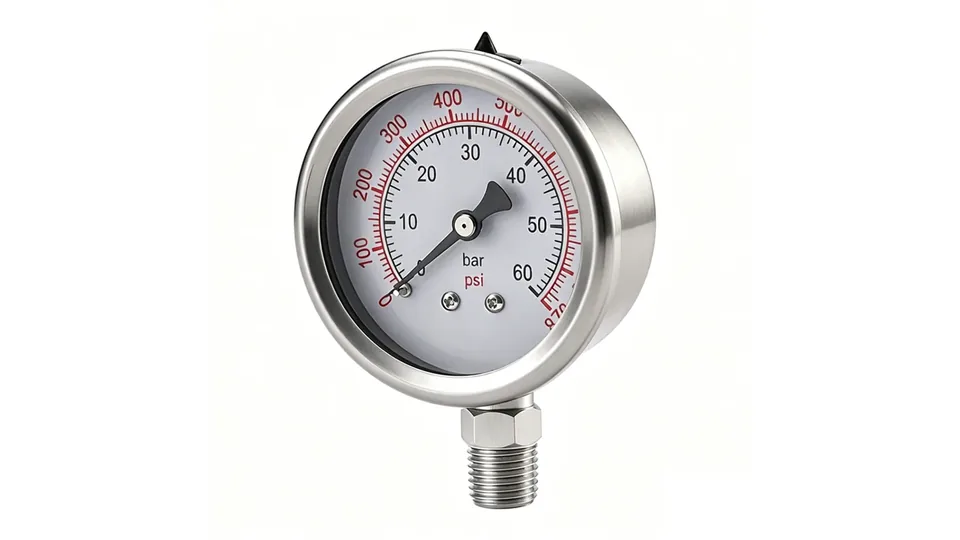
The practical conclusion for stock consistency, abrasive liquor, plugging, vibration, washdown and flush diaphragm protection is to select the complete measurement chain: sensing element, wetted material, range, accuracy, connection, mounting, protection accessory and documentation. The product photograph on this page identifies the real Manogauge gauge construction used as a reference; it is not proof that the same configuration is correct for every medium or pressure. Confirm the final model, dimensions and available options against the current data sheet before purchase.
Key takeaways
- Define the medium first: pulp slurry, coating colour, steam and chemicals create different gauge risks.
- Use diaphragm seals where fibres, solids or corrosive liquids can plug or damage a small socket.
- A local pressure gauge supports troubleshooting but cannot prove flow, consistency or final paper quality.
Related buyer pages
Diaphragm pressure gauge manufacturerFlush diaphragm seals keep stock, black liquor and coating media from plugging the pressure port.
Stainless steel pressure gauge manufacturer316L wetted parts for bleaching chemicals, white water and humid paper-machine environments.
Related reading
- Ammonia Refrigeration Pressure Gauge: R717 Materials and Safety
Ammonia refrigeration pressure gauge guide for R717 cold storage: suction, discharge, oil, defrost ranges, material compatibility and safety checks.
- Cooling Tower Pressure Gauge Monitoring Guide
Cooling tower pressure gauge monitoring for condenser water loops: gauge points, strainer DP, side-stream filters, materials and range selection.
- Industrial Heat Pump Pressure Monitoring: Gauge Selection
Industrial heat pump pressure monitoring for retrofits: gauge and transmitter selection, range, materials, installation points and commissioning checks.
- Bourdon Tube vs Diaphragm vs Capsule Gauges
Compare Bourdon tube, diaphragm and capsule pressure gauges by range, media, response and contamination risk before specifying a gauge.
- PEM vs Alkaline Electrolyzer Pressure Monitoring Guide
Compare PEM and alkaline electrolyzer pressure monitoring: gauge and transmitter locations, hydrogen and oxygen compatibility, isolation, alarms and limits.
Frequently asked questions
What type of pressure gauge is best for pulp slurry?
For pulp slurry, start by evaluating a flush or isolating diaphragm seal pressure gauge because fibres and solids can plug a small Bourdon-tube socket. The final diaphragm material, fill fluid, range and connection must match slurry consistency, temperature, cleaning chemicals and mill piping rules.
Can a stainless steel pressure gauge be used in a paper mill?
Yes for many clean water, air and utility points, but stainless steel alone does not prove compatibility with bleach chemicals, black liquor, caustic, acid cleaning or coating additives. Confirm wetted parts, gasket, case, temperature and certificates for the exact service.
Where should pressure gauges be installed around a pressure screen?
Install readings where operators can compare inlet and outlet pressure, or use a differential pressure method, so plugging across the screen basket can be detected. The taps must be cleanable and positioned so fibre does not isolate the gauge from real process pressure.
Does a stable pressure gauge prove good paper quality?
No. A stable local pressure reading does not prove flow, fibre consistency, steam dryness, coating solids, moisture profile or sheet quality. It should be checked with flow, consistency, temperature, quality control and operator inspection data.
What fill fluid is recommended for pressure gauges on steam-heated paper drying drums?
Silicone fill (rated to 200°C or higher) replaces glycerin where gauges are installed near hot surfaces or steam valves. Glycerin degrades and thickens above approximately 80°C, impairing pointer movement. For chemical pulping lines with caustic or acidic liquors, choose a fill fluid that remains inert if a minor gauge socket leak occurs — silicone is preferred over glycerin in food-adjacent and chemical-contact areas.
How does black liquor affect pressure gauge wetted parts?
Black liquor is highly corrosive, high-temperature and prone to solidifying in narrow passages. Standard brass or 304 SS Bourdon tubes will be attacked. Specify 316L stainless steel or Hastelloy C wetted parts, use a diaphragm seal with a 316L or higher-alloy diaphragm, and include a flushing connection to clear solids between maintenance intervals. Direct-mount gauges are not suitable for black liquor service — a diaphragm seal assembly is mandatory.