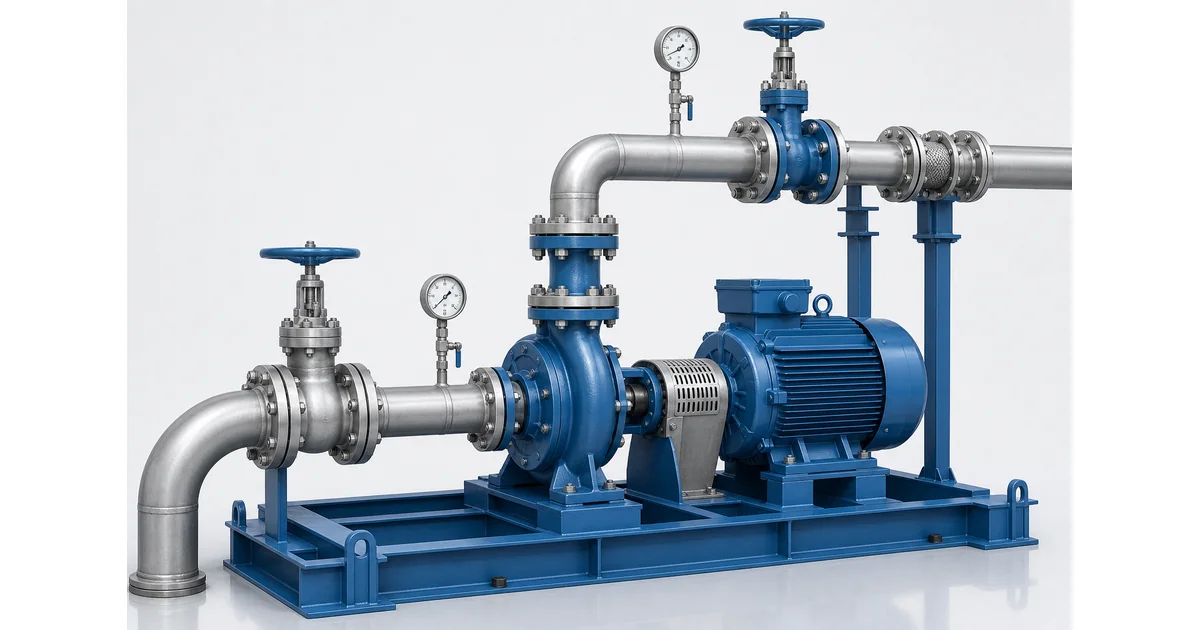
La selección del manómetro de una bomba centrífuga empieza por una pregunta simple: ¿qué decisión debe respaldar la lectura? Un manómetro en aspiración, otro en impulsión y, en algunos sistemas, un punto de presión diferencial convierten un skid de bombeo en una estación de diagnóstico práctica. Interpretar las lecturas sigue exigiendo la curva de la bomba, el caudal y las condiciones del fluido, pero permiten al equipo de mantenimiento detectar rápidamente estrangulamientos, vibración, riesgo de cavitación y cambios del punto de funcionamiento.
Por qué es importante la selección de manómetros para bombas centrífugas
La selección de manómetros para bombas centrífugas es el proceso de elegir el tipo de manómetro, rango, precisión, conexión y protección adecuados para el servicio de succión y descarga de la bomba. Un manómetro de bomba no es solo un indicador de presión. Cuando las lecturas de succión y descarga se toman en puntos estratégicos, ayudan a los operadores a estimar la presión diferencial, comparar la bomba con su curva, encontrar filtros obstruidos, detectar cambios en las válvulas y decidir si un problema de bajo caudal es hidráulico o mecánico.
El Departamento de Energía de EE. UU. señala que los sistemas de bombeo pueden lograr importantes ahorros de energía y costos mediante una buena gestión energética y la elección de equipos eficientes; los datos de presión en campo son una de las señales prácticas utilizadas durante la inspección de un sistema de bombeo. Consulte el recurso sobre Sistemas de Bombeo del DOE para obtener un contexto más amplio sobre la eficiencia del sistema. Para conocer los conceptos básicos de instrumentos relacionados, revise la guía de selección de clase de precisión de manómetros y la guía de selección de amortiguadores de pulsaciones para manómetros.
Ver rangos de manómetro →Más de 143 modelos de manómetros industriales→Instale los manómetros donde las lecturas de succión y descarga respalden las decisiones
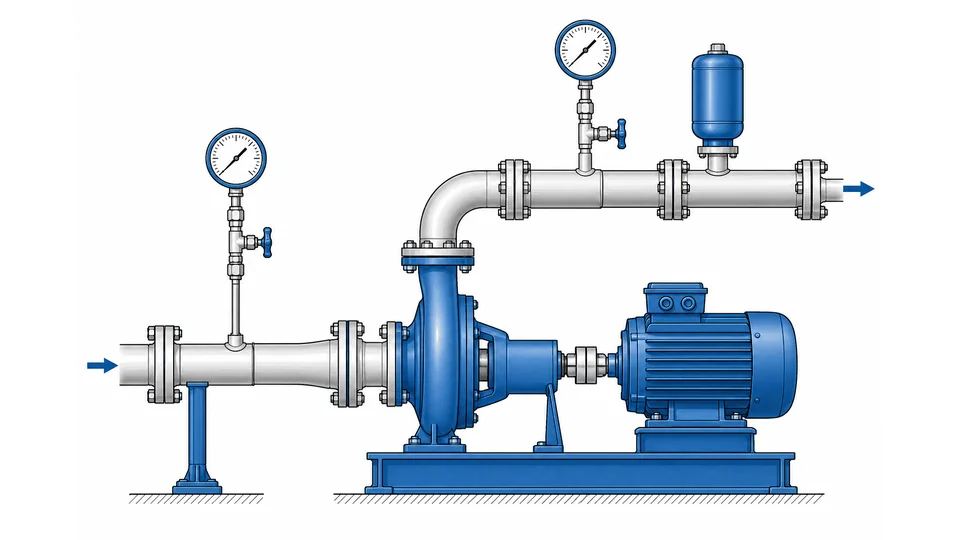
Para la mayoría de las bombas centrífugas, un manómetro cerca de la boquilla de succión y otro cerca de la boquilla de descarga aportan más valor que un solo manómetro aguas abajo. La lectura de succión ayuda a revelar restricciones en la entrada, bajo nivel del tanque, filtros bloqueados y un posible riesgo de cavitación. La lectura de descarga muestra la presión que el sistema exige en la condición de caudal actual. Juntos, forman la diferencia de presión que se puede convertir en altura manométrica para compararla con la curva de la bomba.
| Punto de medición | Qué puede indicar | Elección común de instrumento |
|---|---|---|
| Línea de succión antes de la entrada de la bomba | Baja presión de entrada, carga del filtro, cambio de nivel del tanque, problemas de NPSH | Manómetro compuesto o transmisor con rango de vacío si la succión puede caer por debajo de la presión atmosférica |
| Línea de descarga cerca de la salida de la bomba | Resistencia del sistema, válvula cerrada, impulsor desgastado, cambio en el punto de operación | Manómetro de tubo Bourdon, manómetro con relleno de líquido o transmisor |
| A través del filtro o colador | Carga e intervalo de limpieza | Manómetro de presión diferencial o dos manómetros locales |
Lea el par, no los manómetros: conversión de succión y descarga en altura manométrica de la bomba
Dos manómetros en una bomba solo son útiles cuando el par se lee en conjunto. La diferencia entre la presión de descarga y de succión es lo que la bomba realmente está produciendo, y es el valor que se puede comparar con la curva de la bomba del fabricante. Para un líquido frío similar al agua, la altura diferencial en metros es aproximadamente la presión diferencial en bar multiplicada por 10.2 y dividida por la gravedad específica del fluido bombeado. Una bomba que lee 6.2 bar en la descarga y 0.4 bar en la succión está produciendo un diferencial de 5.8 bar, lo que equivale a unos 59 m de altura en agua y aproximadamente 68 m en un fluido con una gravedad específica de 0.87.
Esa conversión es la razón por la cual los manómetros de succión y descarga deben compartir la misma unidad de presión, una clase de precisión comparable y, cuando la disposición lo permita, la misma elevación. Combinar un manómetro de descarga de 0-10 bar clase 2.5 con un manómetro de succión de -1/+1.5 bar clase 1.6 es viable, pero la incertidumbre combinada debe entenderse antes de que alguien declare que una bomba se ha degradado. Un manómetro de clase 2.5 en una esfera de 0-10 bar puede desviarse por sí solo en 0.25 bar, y 0.25 bar ya representa aproximadamente 2.5 m de altura aparente en agua.
| Lo que reporta el operador | Firma típica del manómetro | Qué revisar antes de culpar a la bomba |
|---|---|---|
| Ruido, vibración, suministro inestable | Lectura de succión menor a la esperada, fluctuación de la aguja | Condición del filtro, posición de la válvula de succión, nivel y temperatura en el recipiente de origen, NPSH disponible |
| El suministro disminuye a lo largo de los meses | Ambas lecturas estables, diferencial por debajo del punto de trabajo en la curva | Holgura del anillo de desgaste, condición del impulsor, velocidad real del eje, gas arrastrado |
| Presión de descarga alta, poco o ningún caudal | Descarga situada cerca de la altura de cierre de la curva | Válvula de descarga estrangulada o cerrada, línea bloqueada, diámetro de impulsor incorrecto |
| La queja persiste, las lecturas parecen normales | El diferencial coincide con la curva a la velocidad indicada | Error del instrumento, restricción aguas abajo o un problema de caudal que ningún manómetro puede detectar |
Las normas de bombas como API 610 (ISO 13709) para servicio petrolero e ISO 5199 para bombas de procesos químicos establecen el marco mecánico y de pruebas para la bomba en sí. No seleccionan el manómetro local. Lo que sí implican es que un manómetro utilizado para la verificación del rendimiento debe ser lo suficientemente repetible como para mostrar una tendencia, y estar instalado donde la lectura no se vea corrompida por la turbulencia de un codo o una válvula parcialmente abierta.
Registre los valores de puesta en marcha. Un par de lecturas tomadas a un caudal, velocidad y temperatura del líquido conocidos el día en que se aceptó la bomba es la referencia contra la cual se juzgará cada lectura posterior, y toma cinco minutos capturarlas. Sin esa línea base, una lectura de presión diferencial es solo un número. La guía de modos de falla de manómetros cubre las causas del lado del instrumento de una lectura desviada, y la selección de la clase de precisión explica qué parte de un cambio aparente es simplemente un error permitido.
Elija el rango de presión a partir de las condiciones normales, de arranque y anómalas
El rango seleccionado debe mantener la presión de operación normal en la parte más legible de la esfera, al mismo tiempo que sobrevive a las condiciones de arranque y anómalas. Como regla general, muchos manómetros mecánicos duran más cuando la presión de operación estable se sitúa alrededor del 25-75% de la escala completa y el servicio pulsante se mantiene más bajo en el rango. El rango final debe seguir los datos del paquete de la bomba, la presión de diseño del sistema y las normas de seguridad del sitio.
No dimensione el manómetro de descarga basándose únicamente en la presión de la placa de características de la bomba. Revise la altura de cierre, el ajuste de la válvula de alivio, la presión de prueba hidrostática, la gravedad específica del fluido y si la bomba puede funcionar contra una válvula cerrada. En el servicio de succión, especifique un manómetro compuesto o apto para vacío cuando la línea pueda operar por debajo de la presión atmosférica.
La aritmética detrás de estos porcentajes, las series de rangos estándar y tres ejemplos prácticos se exponen en cómo calcular el rango de un manómetro.
Preparar lista RFQ para manómetros de bomba →Nuestros ingenieros responden en 24 horas→Secos, con relleno de líquido, de acero inoxidable o transmisor: selección del tipo de instrumento
Un manómetro de tubo Bourdon seco es adecuado para servicios de agua limpia y estable o servicios auxiliares donde la vibración es baja y los operadores necesitan una lectura local sencilla. Un manómetro con relleno de líquido suele ser mejor en bombas con vibración, movimiento rápido de válvulas o pulsación de presión porque el relleno amortigua la fluctuación de la aguja y el desgaste del mecanismo. Se prefieren las partes húmedas de acero inoxidable para líquidos corrosivos, skids de bombeo en exteriores, salas de lavado y muchos servicios químicos. Un transmisor de presión es mejor cuando la sala de control necesita alarmas, tendencias o datos de rendimiento de la bomba.
Para líquidos sucios, viscosos o cristalizantes, puede requerirse un sello de diafragma para que el proceso no pueda bloquear el tubo Bourdon. Para pulsaciones severas, combine un manómetro con relleno de líquido con un amortiguador de pulsaciones o restrictor solo después de verificar el tiempo de respuesta y el riesgo de obstrucción.
Detalles de instalación que hacen confiables las lecturas de los manómetros de bombas
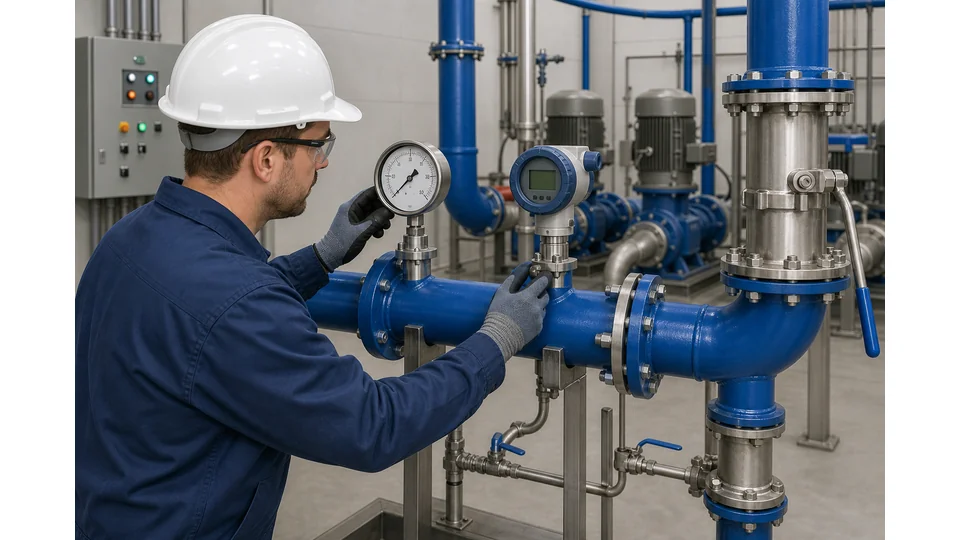
Las buenas lecturas de la bomba dependen de una buena instalación. Monte los manómetros donde sean visibles, estén soportados y aislados de la tensión directa de la tubería. Use una válvula de aislamiento para que el manómetro pueda ser retirado para su calibración. Agregue un punto de purga o venteo donde el gas o líquido atrapado pueda distorsionar la lectura. Mantenga las líneas de impulso cortas, proteja el manómetro de la vibración de la bomba y evite los tramos muertos que atrapan sólidos o líquidos estancados.
- Confirme las ubicaciones de las tomas de succión y descarga con el plano de la bomba y la tubería.
- Haga coincidir las roscas NPT, BSP, G o métricas antes de la instalación; no fuerce formas de rosca diferentes.
- Use un amortiguador de pulsaciones o relleno de líquido cuando haya fluctuación de la aguja.
- Registre las lecturas a la misma velocidad de la bomba y posición de la válvula durante las comprobaciones de la línea base.
Límites de riesgo: lo que los manómetros de bombas no pueden demostrar
Un manómetro de bomba no demuestra el caudal por sí solo. No puede confirmar el margen de NPSH sin datos de presión de vapor, elevación, velocidad y pérdida por fricción, y no puede identificar todas las fallas internas de la bomba sin una curva de la bomba, lectura de caudal, datos de vibración y un historial de mantenimiento. Una presión de descarga normal aún puede ocultar un bajo caudal si una válvula está estrangulada; una baja presión de descarga puede provenir de un bypass abierto, rotación incorrecta, impulsor desgastado o un manómetro defectuoso.
Utilice los manómetros como parte de un conjunto de diagnóstico más amplio. Para servicios de alta presión, líquidos calientes, productos químicos peligrosos, grado alimenticio, farmacéutico o riesgo de explosión, confirme la compatibilidad de materiales, protección contra sobrepresión, requisitos de limpieza, límites de temperatura, estándares y prácticas de instalación con el fabricante OEM de la bomba y el ingeniero de planta antes de realizar el pedido. Manogauge puede apoyar en la selección de manómetros desde los recursos de fabricación en Zhejiang, pero la idoneidad final depende de las especificaciones del proyecto.
Lista de verificación para la selección de manómetros para bombas centrífugas
Antes de realizar el pedido, recopile la presión normal de succión, presión normal de descarga, presión máxima anómala, nombre del fluido, temperatura, viscosidad, gravedad específica, nivel de pulsación, nivel de vibración, rosca de instalación, tamaño de la esfera, clase de precisión, material de la caja y material en contacto con el fluido (partes húmedas). Una solicitud de cotización (RFQ) clara evita manómetros con rangos insuficientes, roscas incorrectas e instrumentos que fallan prematuramente en servicios con vibración o corrosivos.
En resumen, la selección de manómetros para bombas centrífugas funciona mejor cuando las lecturas de succión y descarga se tratan como diagnósticos del sistema, no como números aislados en una esfera.
Para manómetros de descarga y succión de bombas con relleno de glicerina o silicona para la amortiguación de vibraciones y pulsaciones, consulte la página de Manogauge como proveedor de manómetros con relleno de líquido.
Key takeaways
- Un manómetro de succión y uno de descarga juntos convierten un skid de bombeo en una estación de diagnóstico; un solo manómetro aguas abajo no puede separar la restricción de entrada de la demanda del sistema.
- Los manómetros mecánicos duran más cuando la presión de operación estable se sitúa entre el 25-75% de la escala completa, y el servicio pulsante debe situarse más bajo en el rango.
- Los manómetros con relleno de líquido son ideales para bombas con vibración, movimiento rápido de válvulas o pulsación, ya que el relleno amortigua la fluctuación de la aguja y reduce el desgaste del mecanismo.
- Un manómetro de bomba no puede demostrar el caudal ni confirmar el margen de NPSH por sí solo; para ello se necesitan datos de presión de vapor, elevación, velocidad y pérdida por fricción, además de la curva de la bomba.
Часто задаваемые вопросы
¿Las bombas centrífugas necesitan manómetros tanto en la succión como en la descarga?
Para fines de diagnóstico, sí. La lectura de succión muestra señales de restricción de entrada y riesgo de cavitación, mientras que la presión de descarga muestra la resistencia del sistema. Juntos, respaldan las comprobaciones de presión diferencial y altura manométrica.
¿Qué rango debe usar un manómetro de presión de descarga de una bomba?
Elija un rango que mantenga la presión normal en la porción media legible de la esfera, al tiempo que sobrevive a la altura de cierre, los ajustes de alivio y la presión anómala. Confirme con el paquete de la bomba y la presión de diseño del sitio.
¿Los manómetros de bombas deben tener relleno de líquido?
Use manómetros con relleno de líquido donde la vibración o pulsación cause fluctuación de la aguja. Para un servicio limpio y estable, un manómetro seco puede ser suficiente; las pulsaciones severas también pueden requerir un amortiguador de pulsaciones o una estrategia con transmisor.
¿Pueden los manómetros demostrar el caudal de la bomba?
No. Las lecturas de presión ayudan a inferir la condición de operación, pero la confirmación del caudal requiere un caudalímetro, la curva de la bomba, la velocidad, las propiedades del fluido y los datos del sistema.
¿Cuándo es mejor un transmisor que un manómetro local?
Use un transmisor cuando se requieran alarmas, historial de tendencias, monitoreo remoto o datos en la sala de control. Muchos skids de bombeo aún mantienen un manómetro local para mantenimiento y puesta en marcha.
¿Cómo se debe dimensionar el rango del manómetro del lado de succión para una bomba centrífuga?
Los manómetros de presión de succión deben leer todo el rango de presión de succión, incluidas las peores condiciones de baja presión, manteniendo la legibilidad. Para bombas con succión inundada a 0–2 bar relativos, un rango de 0–4 bar es apropiado. Para bombas con altura de succión o vacío en el lado de succión, especifique un manómetro compuesto que lea vacío y presión. El manómetro de succión es crítico para el monitoreo del NPSH (Net Positive Suction Head); los manómetros subdimensionados o con rangos incorrectos ocultan el riesgo de cavitación.
¿Con qué frecuencia se deben reemplazar o recalibrar los manómetros de bombas centrífugas?
Los manómetros en instalaciones de bombas de alta vibración (montaje directo sin sifón ni aislamiento) generalmente requieren reemplazo cada 1–2 años debido a la fatiga por vibración. Los manómetros con relleno de líquido en los cuerpos de las bombas o amortiguados mediante tubos flexibles pueden durar de 3 a 5 años. Incluya los manómetros de las bombas en el programa de mantenimiento preventivo de la planta e inspeccione anualmente si hay desviación de la aguja, mirilla empañada o decoloración del líquido de relleno. Reemplace cualquier manómetro donde el error de cero exceda la tolerancia de la clase de precisión.
¿Cómo convierto las lecturas de los manómetros de succión y descarga de la bomba en altura manométrica?
Reste la presión de succión de la presión de descarga para obtener el diferencial, luego multiplique el diferencial en bar por 10.2 y divídalo por la gravedad específica del líquido para obtener la altura en metros. Un diferencial de 5.8 bar en agua es de aproximadamente 59 m; en un líquido de gravedad específica 0.87, los mismos 5.8 bar son aproximadamente 68 m. Compare esa cifra con la curva de la bomba a la velocidad real del eje, no a la velocidad de la placa de características.
¿Por qué los manómetros de succión y descarga deben tener la misma clase de precisión?
Porque el valor útil es la diferencia entre ellos, y los dos errores se suman. A un manómetro de clase 2.5 en una esfera de 0-10 bar se le permite desviarse en 0.25 bar, lo que equivale aproximadamente a 2.5 m de altura en agua. Si el manómetro de succión es de clase 1.6 y el de descarga es de clase 2.5, el diferencial conlleva la suma de ambos errores permitidos, por lo que una pequeña pérdida genuina de rendimiento puede ocultarse dentro de la tolerancia del instrumento.