01
How a diaphragm gauge works
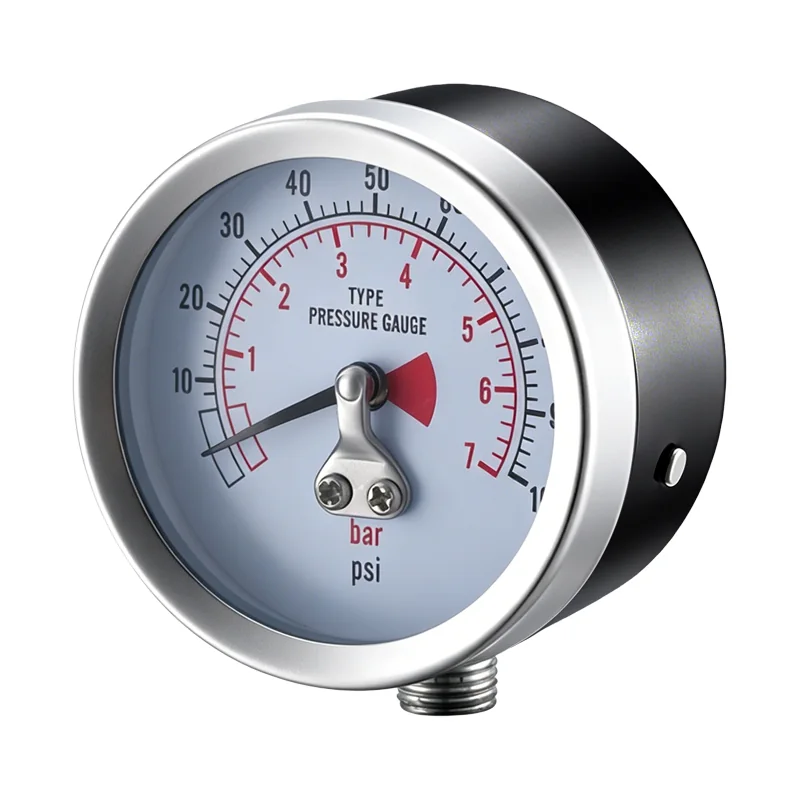
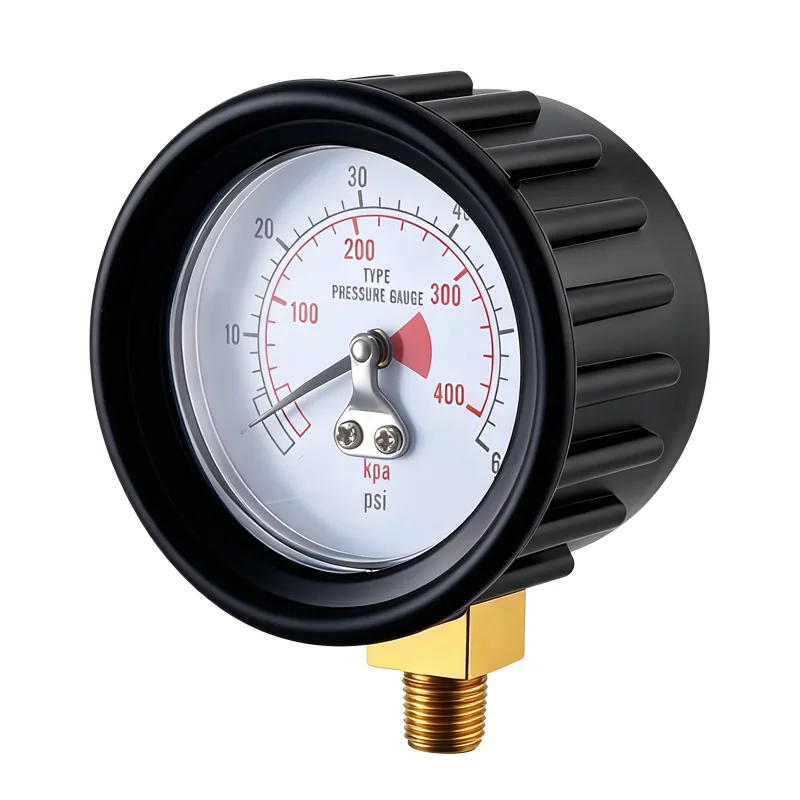
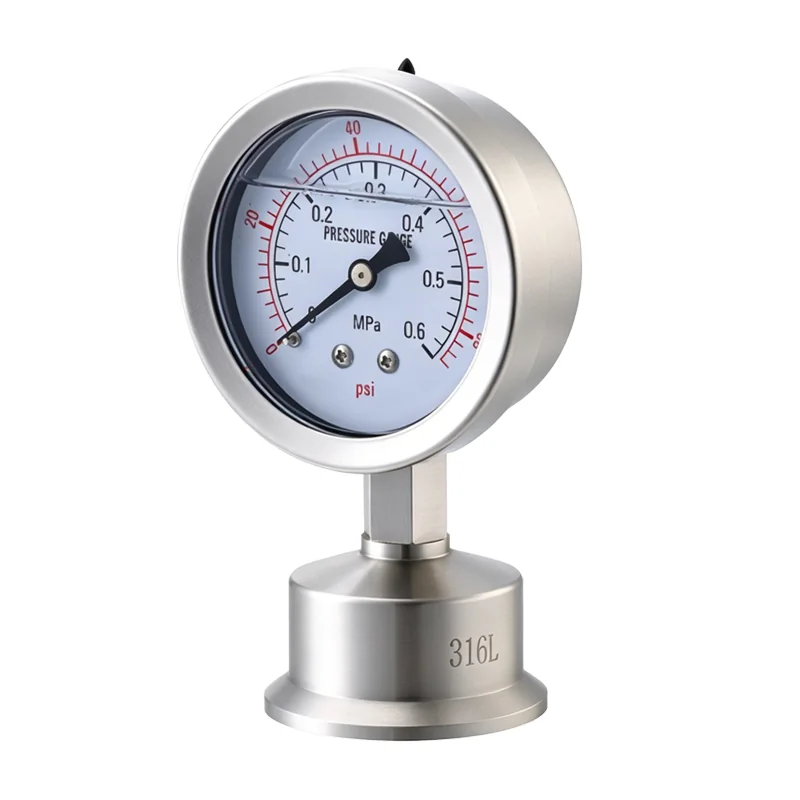
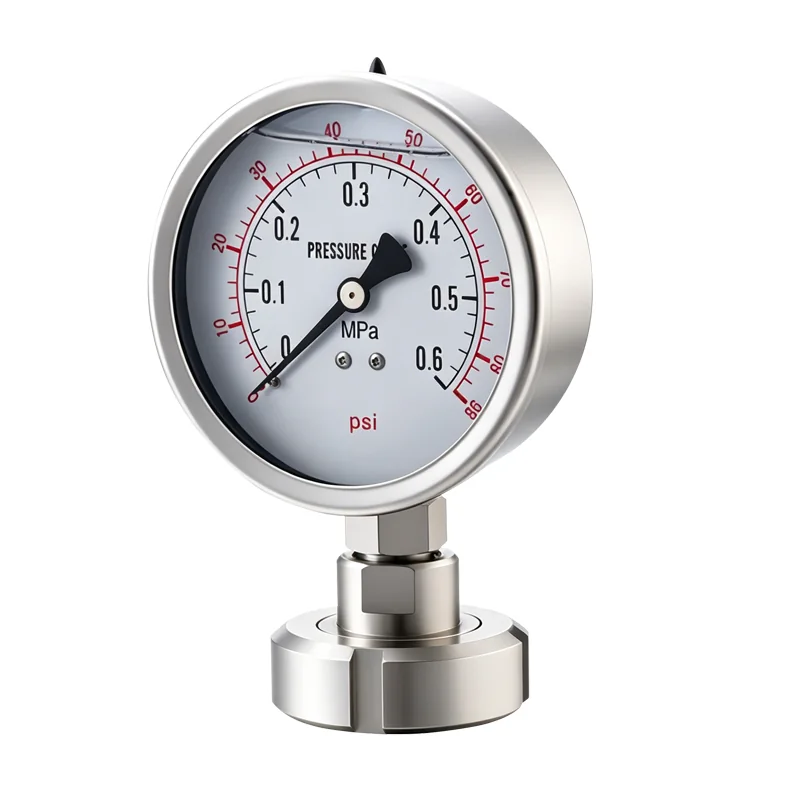
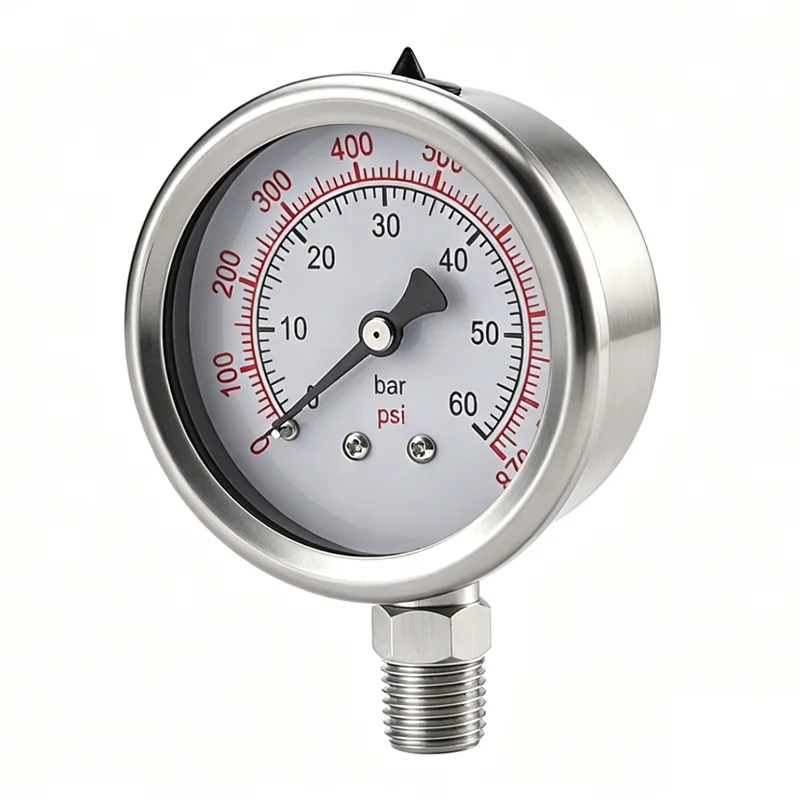
A flexible diaphragm separates the process medium from the gauge movement. Pressure deflects the diaphragm, which transfers motion to the pointer via a linkage — keeping the medium fully isolated from the Bourdon tube and preventing blockage or corrosion of the measuring element.
02
Product scope
Direct-acting diaphragm gauges in sizes 40–100 mm. Wetted parts in brass or stainless steel. Connection threads G, PT and NPT in 1/8 to 1/2 inch. Bottom or back connection. OEM dial artwork, custom ranges and special materials available on request.
03
Typical applications
Chemical and petrochemical dosing systems, food and beverage slurry lines, wastewater treatment, pulp and paper processes, pharmaceutical API handling and any medium that is viscous, crystallising, highly corrosive or hygiene-sensitive.
04
Diaphragm versus Bourdon tube: when the element has to change
A Bourdon tube is a small-bore coiled tube: accurate, inexpensive and entirely unsuitable for anything that can settle, crystallise or solidify inside it. A diaphragm element replaces that narrow bore with a flat or corrugated disc clamped between two flanges, so the process sees a smooth, easily flushed face instead of a dead-ended tube. Three situations usually force the change. First, low pressure: below roughly 0.6 bar a Bourdon tube produces too little deflection for a readable scale, while a diaphragm still gives full pointer travel. Second, media that clog — slurries, latex, pigments, crystallising salts and fibrous liquids. Third, cleaning requirements, where a flush-mounted diaphragm can be wiped or CIP-cleaned and a Bourdon tube cannot. Where the medium is aggressive but clean and the pressure is high, a Bourdon gauge behind a diaphragm seal is often the better answer than a diaphragm element gauge, because it keeps Bourdon accuracy and range while still isolating the medium.
05
Temperature error and capillary length in diaphragm seal systems
A diaphragm seal system is a closed, fill-fluid-filled volume between the diaphragm and the gauge. That fill fluid expands with temperature, and the expansion shows up as a reading error rather than as a fault. Two variables control how large the error becomes: the volume of fill fluid and the span of the gauge. A long capillary holds more fluid and therefore produces more temperature error, and a low-span gauge is affected proportionally more by the same absolute shift. As a practical rule, keep capillary length as short as the installation allows, prefer a direct-mounted seal over a capillary wherever the gauge can sit at the tapping, and question any low-range application that carries several metres of capillary. Fill fluid choice also matters: silicone oil is the general-purpose default, halocarbon fluids are used for oxygen service, and food-grade or FDA-listed fills are specified for food, beverage and pharmaceutical duty. State the process temperature, ambient temperature range and required span when requesting a seal assembly so the temperature effect can be estimated before manufacture.