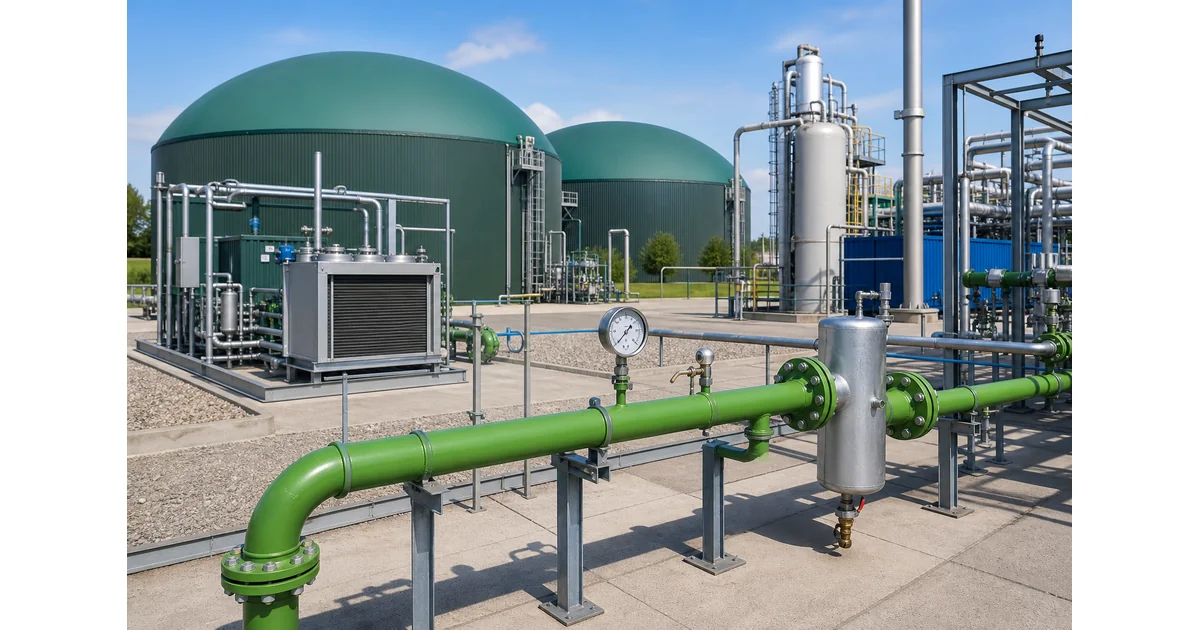
A biogas pressure gauge looks simple, but raw biogas and biomethane upgrading lines create a difficult combination: low operating pressure, wet gas, hydrogen sulfide, possible vacuum, outdoor piping and safety-critical burner or blower controls.
What a biogas pressure gauge has to measure
Biogas pressure gauge selection starts with the gas composition and the pressure window, not with dial size alone. The International Energy Agency introduction to biogas and biomethane defines biogas as a methane and CO2 mixture with small quantities of other gases produced by anaerobic digestion. For instrumentation, those small quantities matter because raw biogas can contain water vapor, hydrogen sulfide, ammonia and siloxanes depending on feedstock and cleanup stage.
Unlike compressed air, biogas headers often operate at low positive pressure. Digesters, gas holders, condensate pots, biological desulfurization vessels, blowers, CHP fuel lines and upgrading skids may need different ranges. Some points need a compound gauge because blower suction, gas-holder movement or filter blockage can pull the line below atmospheric pressure. A gauge that reads 0-10 bar on a line that normally works in millibar will look robust but will not provide a useful operating signal.
The practical goal is not to make every pressure gauge identical. It is to choose each gauge so operators can see abnormal pressure, confirm blower and flare supply, detect moisture blockage and isolate the instrument for maintenance without adding unnecessary leak points.
Ver Opções de Manômetros de Baixa PressãoMais de 143 modelos de manômetros industriais→Biogas pressure gauge range and scale selection
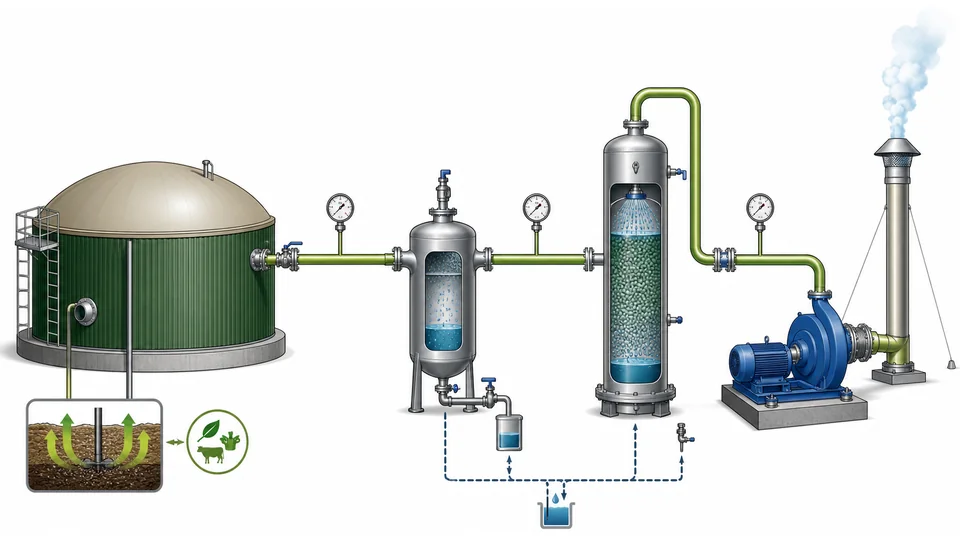
Start with the lowest and highest credible pressure at each location. A digester headspace gauge, a flare pilot gas gauge and a blower discharge gauge can all see different pressures. Normal operation should fall in a readable part of the scale, while expected startup and shutdown transients must not permanently deform the sensing element. For low-pressure gas service, capsule elements, diaphragm elements or low-range Bourdon designs may be more readable than a general industrial gauge.
| Measuring point | Typical selection question | Gauge implication |
|---|---|---|
| Digester headspace or gas holder | Can pressure move close to vacuum or relief setpoint? | Consider low-range or compound scale; protect against condensate. |
| Condensate knock-out pot | Can water accumulation create pressure drop? | Use a readable low range and install with drainage access. |
| H2S scrubber or activated carbon vessel | Is differential pressure across media rising? | Use inlet/outlet gauges or a differential pressure indicator. |
| Blower suction and discharge | Is the line under suction, pulsation or vibration? | Check compound range, damping and mounting support. |
| CHP engine, boiler or flare supply | What minimum supply pressure is required by the burner package? | Use clear scale marks and maintenance isolation. |
For general readability background, compare Manogauge's pressure gauge dial size selection guide and differential pressure gauge filter selection guide.
H2S corrosion and wet gas change the material decision
Hydrogen sulfide is the reason a biogas pressure gauge should not be specified from pressure range alone. H2S in the presence of moisture can contribute to corrosive acidic condensate. Oklahoma State University Extension notes in its anaerobic digestion biogas cleanup guidance that hydrogen sulfide combined with water vapor can form sulfuric acid, which is corrosive to engine components. The same wet-gas logic is relevant to instrument wetted parts, small passages and threaded connections.
For raw biogas, confirm the expected H2S range, gas temperature, relative humidity, condensate loading, cleaning chemicals and whether the takeoff is before or after desulfurization. Stainless steel wetted parts may be preferred over brass in many wet or corrosive services, but the final material depends on actual gas chemistry and site rules. Elastomers, window material, case ventilation and connection seals also need review. If the medium can carry foam, sludge droplets or biological solids, a small restrictor can plug and create a false stable reading.
When the instrument is after a scrubber, do not assume the gas is always dry or sulfur-free. Breakthrough, media saturation and drain failure can expose downstream gauges to the same conditions the cleanup unit is meant to remove.
Solicitar Revisão de Materiais para BiogásNossos engenheiros respondem em 24 horas→Installation details for biomethane pressure monitoring
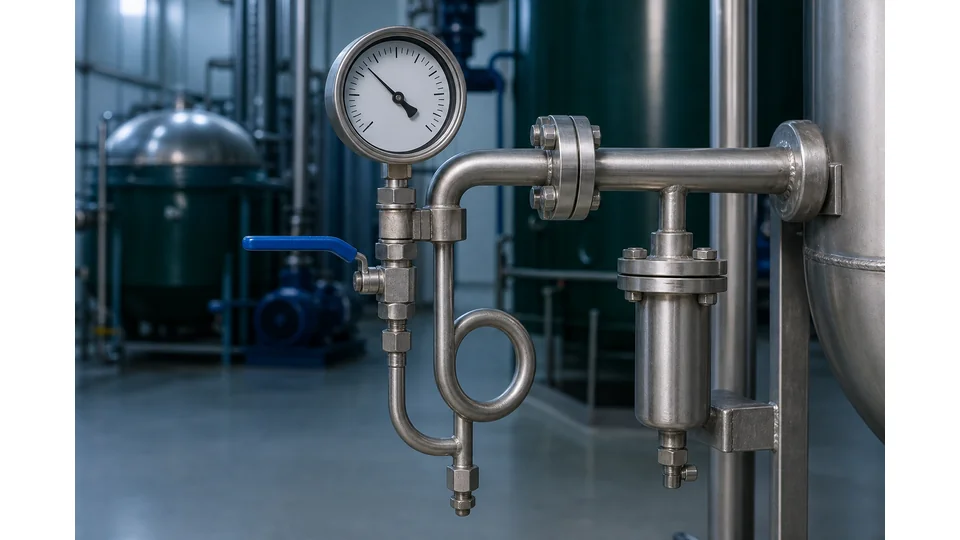
Good biomethane pressure monitoring is partly a piping problem. A gauge mounted at the lowest point of a wet gas line can become a condensate collector. A gauge mounted on an unsupported small-bore branch can fatigue under vibration. A gauge mounted without isolation can turn routine calibration into a plant shutdown task.
The EPA AgSTAR Anaerobic Digester/Biogas System Operator Guidebook includes routine checks such as verifying flare pilot gas cleanliness and checking pressure gauges for sufficient gas supply. That operator-level need is exactly why the gauge must be readable, accessible and maintainable. Use an isolation valve, provide drainage where condensate can collect, keep the dial visible from the normal walkway, and avoid dead legs that trap water or corrosive liquid.
Outdoor digesters and gas yards add weather exposure. Specify IP protection, UV-resistant dial materials if needed, a case vent suitable for the installation, and freeze protection for condensate-prone takeoffs. If the area classification or national gas-code requirements apply, the final installation should be approved by the project engineer or safety authority before procurement.
Where a pressure transmitter may be better than a dial gauge
A local dial gauge is valuable during inspection, commissioning and maintenance, but it is not always the primary control instrument. If pressure trips, blower control, flare permissives, remote alarms or data logging are required, a pressure transmitter or differential pressure transmitter may be the better main signal. The dial gauge can then serve as a local reference point or backup indication.
Use the same process data for both devices: normal pressure, maximum credible pressure, vacuum conditions, H2S, moisture, temperature, hazardous area, cable routing and cleaning method. A transmitter with an unsuitable pressure port or diaphragm material can fail for the same reason as a mechanical gauge. If the process needs both continuous monitoring and local readability, compare the architecture in Manogauge's pressure transmitter vs pressure gauge selection guide.
For low-pressure scrubber monitoring, a differential pressure instrument may reveal media loading earlier than two separate local gauges. For flare or burner fuel supply, the package vendor may define minimum pressure, switching logic and proof-of-flow needs; those requirements should control the instrument selection.
RFQ checklist for a biogas pressure gauge
Before sending an RFQ, write the actual service into the specification. A useful RFQ for a biogas pressure gauge should include the measuring point, normal pressure, minimum and maximum pressure, vacuum possibility, gas stage, H2S range, humidity or condensate risk, temperature, connection, wetted material, case material, IP requirement, dial diameter, mounting position and certificate needs.
- State whether the gauge sees raw biogas, partially treated gas or biomethane after upgrading.
- Confirm if the line can collect condensate and whether a drain leg or seal is required.
- Specify if the gauge must survive outdoor service, vibration, blower pulsation or freezing conditions.
- Clarify whether readings are for local inspection only or part of a control/safety procedure.
- Request material confirmation for H2S and wet-gas exposure instead of assuming pressure range is enough.
Manogauge, based in Zhejiang, China, supplies industrial pressure gauges, differential pressure instruments and transmitter options for OEM and export projects. Final biogas pressure gauge selection still depends on confirmed site gas composition and local safety requirements; for toxic gas, explosive atmosphere, oxygen enrichment, high H2S or burner safety circuits, have the responsible engineer approve the instrument and installation before ordering.
Key takeaways
- A biogas pressure gauge must be selected for low pressure, wet gas, H2S and possible vacuum, not only for nominal line pressure.
- Material compatibility, condensate drainage and isolation valves often determine service life more than the dial range.
- Use transmitters or differential pressure instruments when blower control, flare permissives, alarms or media loading trends are required.
Часто задаваемые вопросы
What range is best for a biogas pressure gauge?
There is no universal range. Many biogas points are low pressure, so specify the normal operating pressure, maximum credible pressure and any vacuum condition. The gauge should be readable in the normal zone without being overloaded during expected transients.
Why is H2S important for pressure gauge selection?
H2S with moisture can create corrosive condensate that attacks wetted parts, threads and small passages. Material selection should be based on confirmed gas chemistry, not only on pressure range.
Should a biogas line use a pressure gauge or a pressure transmitter?
Use a local gauge for inspection and maintenance readability. Use a transmitter when the pressure signal controls a blower, flare, alarm, shutdown or remote monitoring system. Many plants use both.
Where should a biogas pressure gauge be installed?
Install it where the reading represents the process, the dial is accessible, condensate cannot sit inside the gauge, and an isolation valve allows service. Avoid unsupported small-bore branches and low points that collect water.
What should be included in a biogas pressure gauge RFQ?
Include gas stage, normal and maximum pressure, vacuum possibility, H2S range, humidity, temperature, condensate risk, connection thread, wetted materials, case material, IP rating, mounting and certificate requirements.