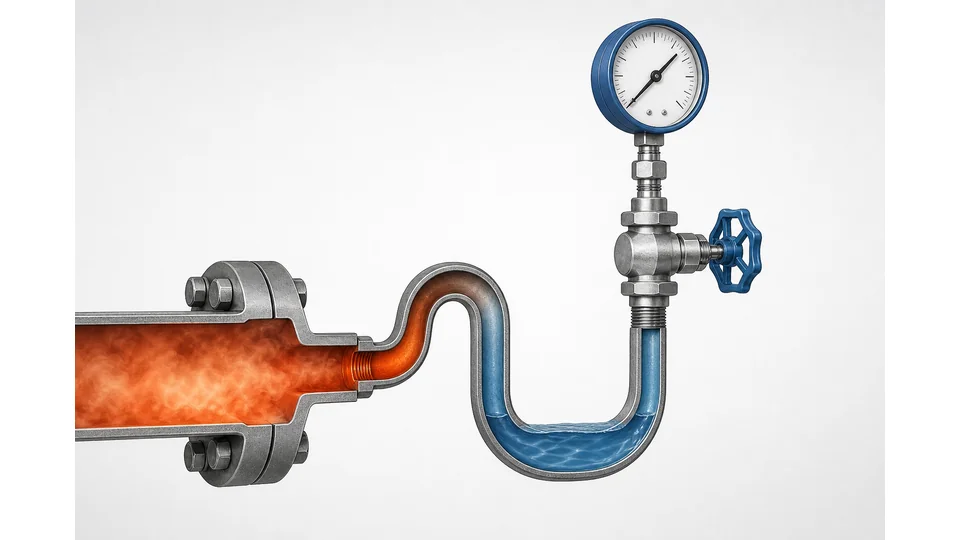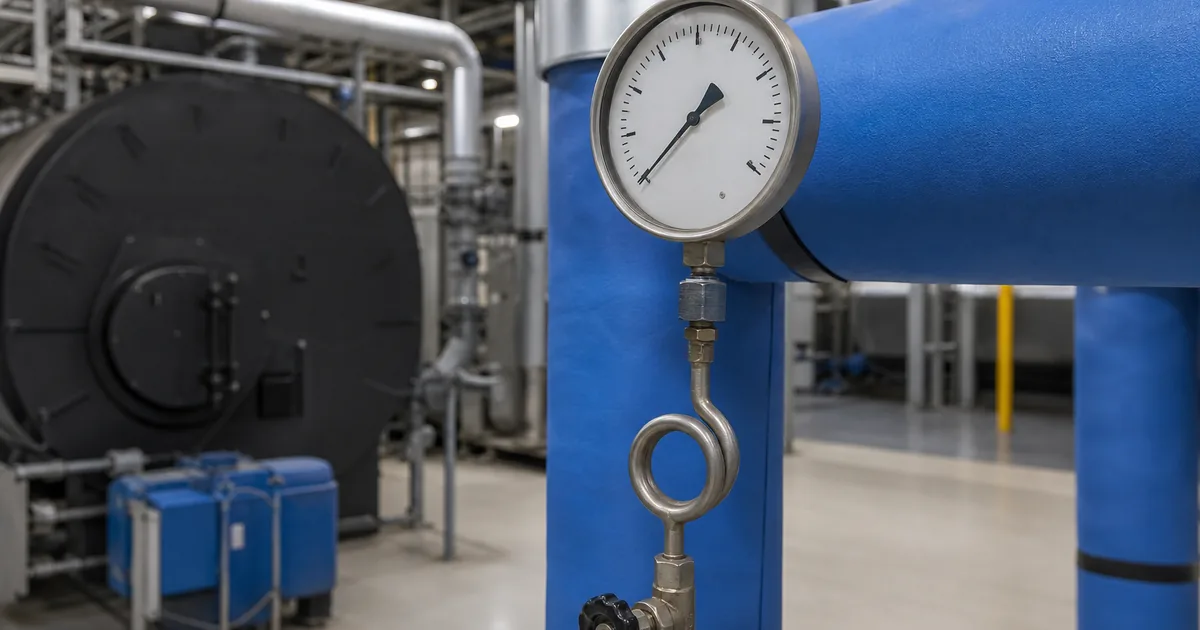
A steam boiler pressure gauge siphon is a small fitting with a large reliability role. It keeps live steam from directly overheating the pressure element, creates a condensate buffer, and gives operators a more stable local reading. This guide explains when to use a pigtail or U-type siphon, how to select gauge range and valves, and what must still be confirmed by the boiler engineer before installation.
A steam boiler pressure gauge siphon is a looped tube installed between the steam tapping point and the pressure gauge. Its purpose is simple: hold a small column of condensate so the Bourdon tube, capsule or sensing element is not exposed to direct steam temperature. In steam service, this is a protection device for readability and instrument life, not a substitute for boiler safety controls.
The main keyword for this article is steam boiler pressure gauge siphon. Related terms include pigtail siphon, U-type siphon, boiler pressure gauge installation, steam pressure gauge range and gauge cock. Public code language commonly requires steam boilers to have pressure indication, and technical suppliers note that gauges used on steam or hot gas should be protected by a siphon and isolation cock. For reference, see ASME BPVC background from ASME and steam gauge installation guidance from Spirax Sarco.
For broader instrument fundamentals, compare this article with the Manogauge industrial pressure gauge selection guide and the pressure gauge installation best practices.
Browse Steam Pressure Gauge Options →143개 이상의 공업용 게이지 탐색→
Pressure readings on a boiler should be understood as part of the complete steam system. Useful local readings may appear at the boiler steam space, steam header, pressure reducing station, deaerator or auxiliary steam branch, but each location has different temperature, pulsation, vibration and maintenance access conditions.
The siphon normally sits directly below or beside the gauge, with a gauge cock or isolation valve used for calibration and replacement. A pressure snubber may be considered when pulsation is severe, but it does not replace the temperature buffering function of the siphon. A remote capillary or transmitter may be better when the tapping point is too hot, too high, or unsafe for routine viewing.
Do not install a gauge simply where it looks convenient. The tapping point should represent the pressure that operators need, avoid dead legs where condensate or dirt can mislead the reading, and allow safe isolation before maintenance.
Both pigtail and U-type siphons create a condensate barrier. The choice usually depends on space, orientation, pipe layout, local maintenance preference and the connection standard used by the plant. Pigtail siphons are common on vertical gauge installations because the loop is compact. U-type siphons are often easier to drain, inspect or fit in some horizontal pipe arrangements.
<div style="overflow-x: auto;"><table width="100%"><thead><tr><th>Selection item</th><th>Why it matters</th><th>Engineering check</th></tr></thead><tbody><tr><td>Siphon shape</td><td>Controls mounting envelope and condensate pocket</td><td>Confirm pigtail or U-type orientation against the tapping layout</td></tr><tr><td>Material</td><td>Steam temperature, corrosion and pressure rating affect service life</td><td>Match carbon steel, stainless steel or alloy choice to the boiler specification</td></tr><tr><td>Connection</td><td>Leak integrity depends on compatible threads or fittings</td><td>Confirm NPT, BSP, G or metric connection before ordering</td></tr><tr><td>Valve</td><td>Operators need safe isolation for calibration and replacement</td><td>Use a gauge cock, needle valve or block valve approved by the site engineer</td></tr><tr><td>Frost exposure</td><td>Condensate inside the siphon can freeze and damage the assembly</td><td>Review insulation, heat tracing or alternative mounting in cold locations</td></tr></tbody></table></div>
For steam boiler pressure gauge siphon selection, do not rely on pressure range alone. Temperature class, connection sealing, valve practice, site code and maintenance access are equally important.
Confirm Boiler Gauge Requirements엔지니어가 24시간 이내 답변→
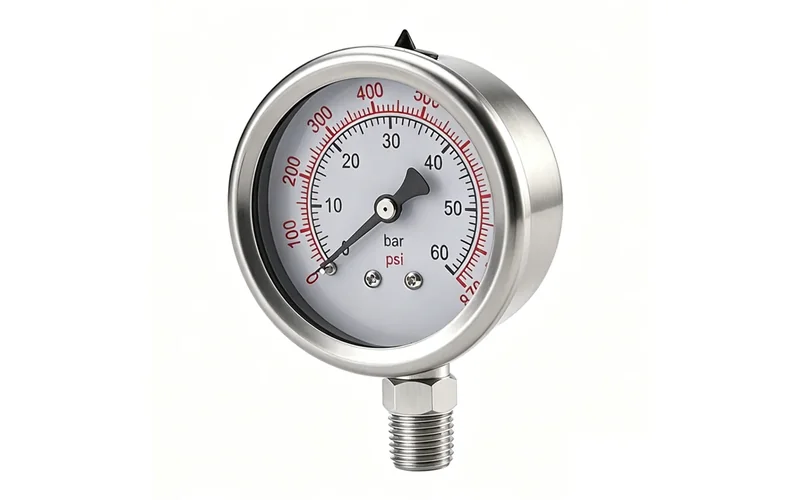
The pressure gauge should cover normal operating pressure, startup behavior and credible upset conditions without forcing the normal reading into the bottom of the scale. A common engineering practice is to place normal operation in the middle portion of the dial where the pointer is readable, but final range must be checked against the boiler design pressure, safety valve setting and local code.
Accuracy class should match the task. A general operator gauge may not need laboratory accuracy, but commissioning, combustion tuning, safety checks or custody-related steam measurement may require a better reference instrument. Dial diameter, pointer contrast and mounting height also matter because boiler rooms are noisy, hot and often inspected quickly.
If vibration or pump pulsation makes the pointer unstable, a liquid-filled gauge, restrictor, snubber or remote mounting may help. For corrosive condensate, outdoor locations or washdown areas, stainless steel wetted parts and enclosure protection should be reviewed. See the Manogauge 316L stainless vs brass pressure gauge material guide when wetted-part compatibility is uncertain.
A siphon must be primed before service so the condensate barrier exists when the gauge is first exposed to steam. The gauge should be isolated, vented and removed only according to the site lockout and boiler safety procedure. Never loosen a gauge connection while pressure or hot condensate may be trapped.
The most common field problems are unprimed siphons, blocked siphon passages, wrong thread engagement, missing isolation valves, poor dial orientation, unsupported impulse lines and gauges selected only by nominal pressure. These issues can produce false readings or create maintenance hazards.
A steam boiler pressure gauge and siphon cannot prove that a boiler is safe by itself. It must be used together with water-level devices, safety valves, burner controls, inspections, operator logs and the applicable boiler code. High-pressure steam, superheated steam, corrosive treatment chemicals, hazardous areas and insurance inspection requirements should always be reviewed by the boiler owner, licensed inspector or responsible engineer before final selection.
A siphon holds condensate between the steam tapping point and the gauge, reducing direct steam temperature at the sensing element and helping the gauge last longer.
Both can work when correctly rated and installed. The choice depends on pipe orientation, space, maintenance access, material, thread standard and the site engineer approval.
No. A siphon only protects the pressure gauge. Boiler safety still requires safety valves, water-level controls, burner safeguards, inspections and compliance with local boiler rules.
The range should cover normal operation and credible upset conditions while keeping the normal reading in a readable part of the scale. Final range must be checked against design pressure and safety valve settings.
Confirm the siphon is primed, the valve isolates safely, the connection thread matches, the material suits steam service, and the gauge can be read and maintained without exposure to hot condensate.