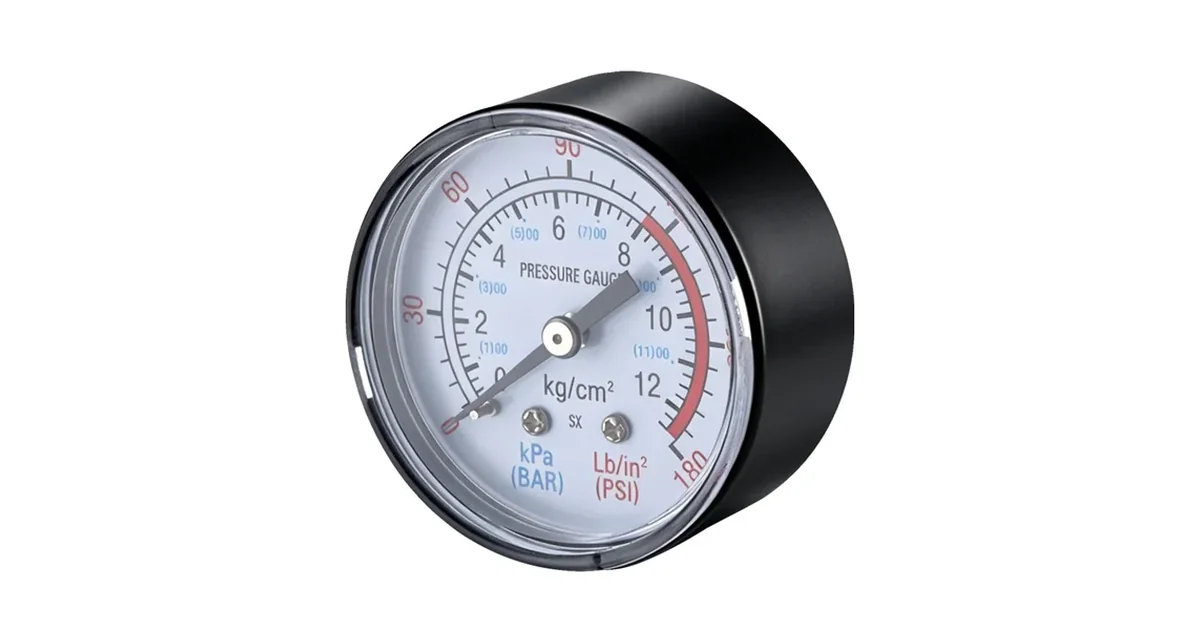
산업 현장에서 압력계는 배관과 장비 전반에 설치되는 가장 기본적인 공정 계기입니다. 그러나 수많은 모델 중 실제 운전 조건에 맞는 사양을 고르려면 압력 범위, 매체, 재질, 정확도, 설치 환경을 순서대로 확인해야 합니다. 잘못 선정하면 접액부 부식, 누출, 부적절한 범위로 인한 기계 손상, 진동에 의한 조기 고장이 발생할 수 있습니다. 이 가이드는 산업용 압력계 선정을 7단계로 정리하여 운전 압력, 공정 매체, 연결 방식, 보호 액세서리까지 검토할 수 있는 실무 체크리스트를 제공합니다.
Related products
- General Pressure Gauge - Radial (ZX-08-R) — 0–40 MPa
- Stainless Steel Pressure Gauge - Radial (ZX-01-R) — 0–100 MPa
- Liquid-Filled Pressure Gauge - Radial (ZX-06-R) — 0–60 MPa
Часто задаваемые вопросы
What are the key parameters for selecting an industrial pressure gauge?
The 7-step selection framework: (1) Pressure range — select 1.25–1.5× maximum working pressure as full scale; (2) Accuracy class — 1.6 for monitoring, 0.6 for control loops; (3) Process medium — determine wetted material requirements (brass for dry air, 316L SS for corrosive/food, Hastelloy for aggressive chemicals); (4) Fill type — dry for stable environments, liquid-fill for vibration/pulsation; (5) Dial size — 63mm for space-constrained, 100mm standard, 160mm for remote reading; (6) Connection — specify size AND type (NPT, BSPP, BSPT, metric); (7) Environment — IP rating, ATEX zone, temperature range.
What process media require stainless steel wetted parts?
Specify 316L stainless steel wetted parts for: salt water and marine environments, food and beverage processes, mild chemical service (pH 4–10 with no chloride), steam and condensate systems, hydraulic oil (if chemical compatibility is confirmed), and CO₂/refrigerant systems. Brass wetted parts are acceptable ONLY for compressed air, inert gases, and clean water below 60°C — never for corrosive chemicals, seawater, or food contact applications.
What does 'wetted parts' mean for a pressure gauge?
Wetted parts are all gauge components that contact the process medium: the Bourdon tube, the socket (connection body), the socket threads, and any O-rings or seals in the process connection. The case, movement, and dial are not wetted parts and do not require process compatibility. When specifying material for corrosive service, you only need to upgrade the wetted parts, not the entire gauge.
How do I specify a pressure gauge for outdoor installation?
Outdoor installations require: IP65 minimum case protection (EN 60529) for dust and rain; UV-stable case material (ABS or stainless steel — avoid polycarbonate in direct sunlight); operating temperature range covering site minimum (arctic: −40 °C, temperate: −20 °C) and maximum; liquid fill to prevent condensation in the case; and anti-corrosion coating or all-stainless construction in coastal or industrial atmospheres.
What certifications should I require for pressure gauges in a regulated facility?
Standard industrial: CE marking (EU, PED compliance); ISO 9001 (manufacturing quality). Application-specific: ATEX/IECEx (explosive atmospheres); 3-A or EHEDG (food/dairy); FDA 21 CFR (pharmaceutical); KS (Korea); CRN (Canada); INMETRO (Brazil). For safety instrumented systems, verify the gauge can meet the proof-test interval and PFD requirements of the target SIL level. Request the Declaration of Conformity and test certificates for each required standard.
What is the difference between gauge pressure, absolute pressure, and differential pressure measurement?
Gauge pressure (G or PSIG): measures pressure relative to atmospheric pressure — the most common type for industrial processes. Absolute pressure (A or PSIA): measures pressure relative to perfect vacuum — required for gas density calculations, boiling point determination, and vacuum system monitoring. Differential pressure (DP): measures the difference between two pressures — used for flow measurement (orifice plates), filter ΔP monitoring, and level measurement by pressure difference. Specify the measurement type explicitly, as gauges are not interchangeable between types.