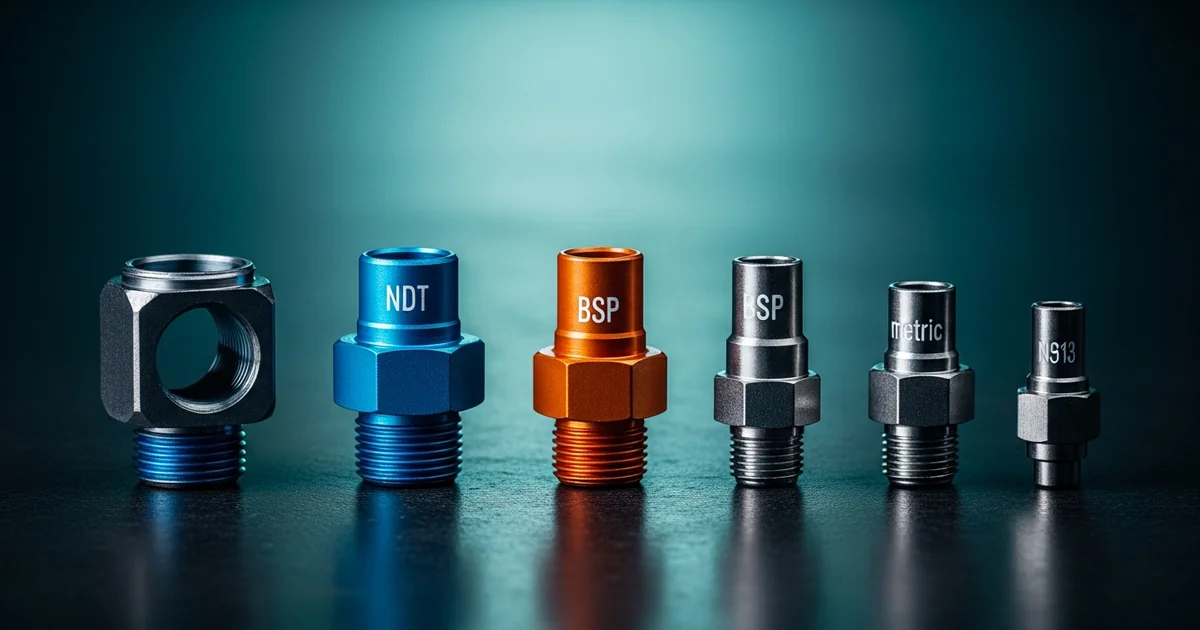
プロセス接続は、あらゆる圧力計にとって重要なインターフェースであり、測定精度、システムの安全性、長期的な信頼性に直接影響します。ネジの不適合は、壊滅的な漏洩、機器の損傷、プロセスのダウンタイムにつながる可能性があります。この技術リファレンスでは、一般的な産業用圧力計のネジ規格(NPT、BSPT、G (BSPP)、メートルネジ、SAEなど)を詳細に比較し、エンジニアが一般的なプロセス計装から高圧油圧システムまで、特定の用途に適した正しい選定を行えるようガイドします。
基本的なシール機構:テーパーネジと平行ネジ
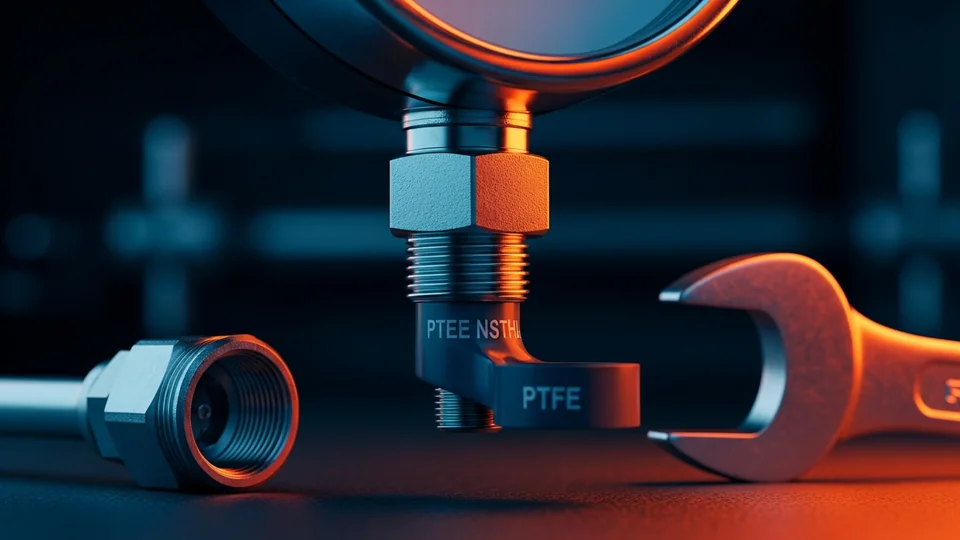
産業用圧力計の接続部は、ネジ自体、または別の面でシールを達成する2つの方法のいずれかを採用しています。この違いを理解することが、適切なゲージ選定の第一歩です。
テーパーネジ(管用テーパーネジとも呼ばれる)は、金属同士の干渉によってシールを形成します。オスネジとメスネジはわずかな円錐角で切られており、接続部を締め付けると、ネジのフランク面が圧縮・変形してシールが形成されます。NPTやBSPT規格に見られるこのタイプの接続では、微細な隙間を埋めて「かじり」を防ぐために、常にシール剤が必要です。
平行ネジ(ストレートネジとも呼ばれる)は、全長にわたって直径が一定です。ネジ自体の役割は、機械的な締結力を提供することのみです。シールは、ボンデッドワッシャー、Oリング、メタルガスケットなどの独立したシール要素を、ゲージソケットまたは相手側ポートの滑らかな機械加工面に押し付けることによって行われます。一般的な平行ネジ規格には、G (BSPP)、メートルネジ、SAEなどがあります。
圧力計カタログを見る →143以上の工業用ゲージを見る→テーパーネジの規格:NPTとBSPT (R/Rc) の比較

NPT (National Pipe Taper) は北米で主流の規格で、ASME B1.20.1で定義されています。60°のネジ山角度と平坦な頂と谷が特徴です。テーパー率は1° 47’ (1.7833°)、または1/16 (インチあたり) です。
BSPT (British Standard Pipe Taper) はヨーロッパ、アジア、その他多くの地域で一般的です。ISO 7-1, EN 10226-1, GB/T 7306.2などの規格で定義されています。BSPTは、丸みを帯びた頂と谷を持つ55°のウィットワースネジ形状が特徴です。オスネジは「R」、メスネジは「Rc」と表記されます。
重要な点は、NPTとBSPTのネジに互換性はないということです。一部のサイズでは1インチあたりのネジ山数(TPI)が同じですが、ネジ山角度(60° vs 55°)とネジ形状が異なるため、不適合な接続は「かじり」やネジ山の損傷を引き起こし、特に圧力や振動下では確実にシールできない漏洩経路を作り出してしまいます。設置前には必ずネジゲージを使用して種類を確認してください。
平行ネジの規格:G (BSPP) とメートルネジ
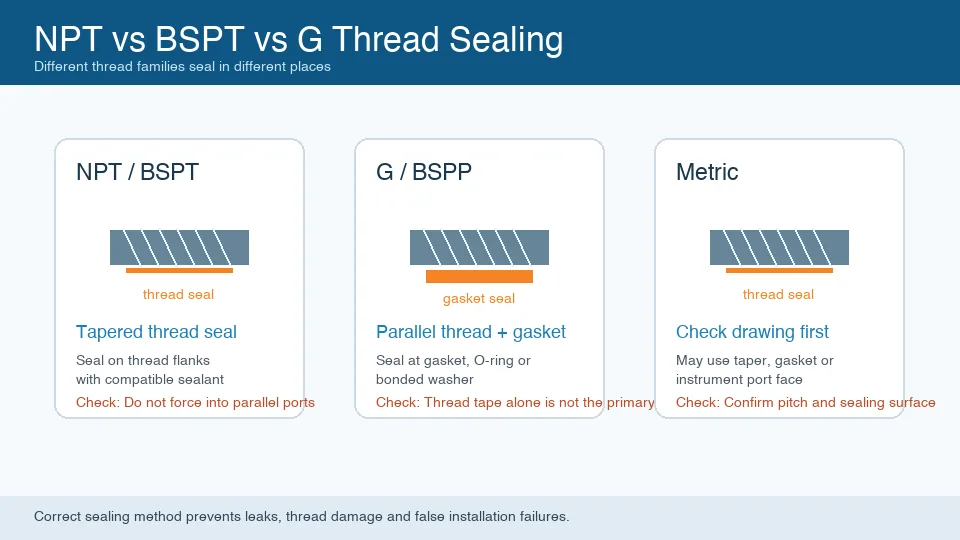
G / BSPP (British Standard Pipe Parallel) ネジは、ISO 228-1で定義されています。「G」という呼称が標準です。これらのネジにはシールワッシャーが必要で、通常はボンデッドシール(例:加硫エラストマーリング付き金属ワッシャー)が使用され、ゲージソケットの端面と相手側ポートの端面との間で圧縮されます。この設計は一般的な産業用途で広く採用されており、EN 837-1に準拠したゲージの標準仕様です。
メートル平行ネジも、特にヨーロッパ製の機器で広く使用されています。高品質な圧力計で最も一般的な接続はM20×1.5で、EN 837-1でしばしば指定されます。この接続は通常、オスポートの溝にはまるプロファイルシールリング(例:NBRやFKM製)を使用し、滑らかなメスポート面に押し付けてシールします。この方法は、試験台や油圧システムなど、高圧用途で非常に信頼性の高いシールを提供します。
無料見積もりを依頼するエンジニアが24時間以内に返答→高圧油圧接続:SAE J514規格
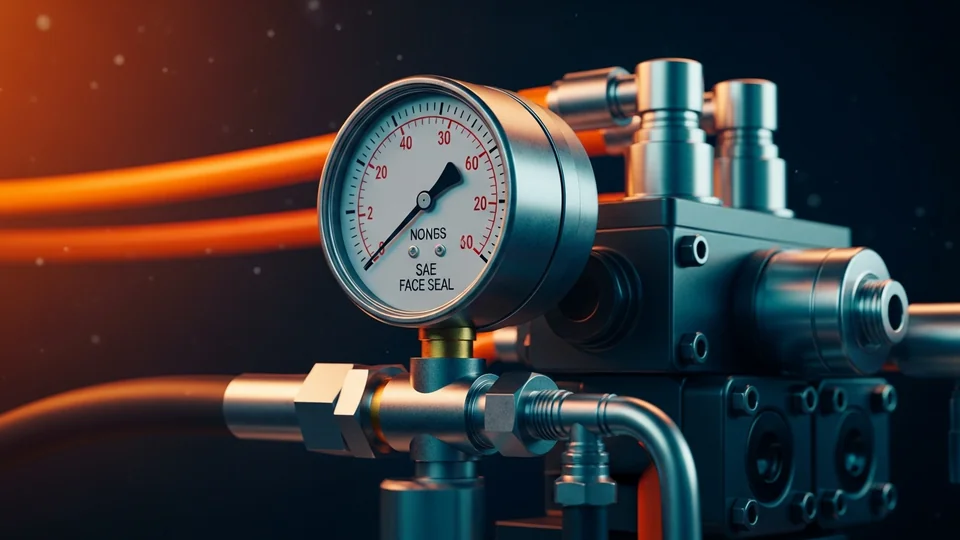
高圧、圧力スパイク、振動が特徴の油圧システムでは、標準的な管用ネジよりも堅牢な接続タイプが求められます。SAE J514規格は、これらの用途向けに2つの主要なタイプを定義しています。
- SAE J514 37°フレア (JIC): この接続は、機械的強度を高めるためのストレートネジと、オス継手の37°円錐フレアが特徴で、メス継手の一致する37°コーンに着座します。シールは、2つのコーン間の金属同士の線接触によって形成されます。これは世界中の流体動力システムで非常に一般的です。
- SAE J514 Oリング・フェイスシール (ORFS): 高振動環境での漏洩防止に最適な接続の一つと見なされています。オス継手はストレートネジと、Oリングを収める溝のある平坦な面を持っています。この平坦な面をメスポートの平坦な面に締め付け、Oリングを圧縮することで、非常に信頼性の高いシールを形成します。この設計は、重要な建設機械や産業用油圧ユニットでしばしば指定されます。
シール剤の選定と接続部の向き
シール剤の選択は、完全にネジのシール機構によって決まります。
- テーパーネジ (NPT, BSPT) の場合: シール剤が必須です。高密度のPTFEテープ(オスネジに時計回りに3~4周巻く)または適切な液状/ペースト状のPTFE系シール剤が必要です。振動のある用途では、空気の非存在下で硬化する嫌気性シール剤が、より堅牢でロックされたシールを提供できます。シール剤がプロセス流体に入るのを防ぐため、常に先端の1~2山は空けておいてください。
- 平行ネジ (G/BSPP, メートルネジ, SAE) の場合: 絶対にシール剤を使用しないでください。 シールはガスケット、ボンデッドシール、またはOリングによって行われます。テープやペーストを塗布すると、シール面が正しく接触するのを妨げ、漏洩の原因となります。締め付け時のかじりを防ぐためにネジ山に薄くマシン油を塗布することはありますが、これはシール剤としては機能しません。
接続部の向きとは、ゲージケース上のプロセス接続の位置を指します。下部接続(またはブルドン管直結)はゲージの下から伸びており、垂直配管や表面取り付けに使用されます。背面接続(センターバックまたはローワーバック)はゲージの背面から伸びており、パネルマウントに最適で、計器盤と面一でゲージを読み取ることができます。
Key takeaways
- テーパーネジ(NPT, BSPT)はネジ山でシールし、シール剤が必須です。ネジ山角度(60° vs 55°)が異なるため互換性はありません。
- 平行ネジ(G/BSPP, メートルネジ)は直径が一定で、加工面にボンデッドシール、ガスケット、Oリングを押し当ててシールします。
- 高振動の油圧システムには、37°フレア(JIC)やOリング・フェイスシール(ORFS)などのSAE J514接続が優れた耐漏洩性を提供します。
- 平行ネジやSAE接続には決してシール剤を使用しないでください。シールは機械的に行われ、シール剤は正しい着座を妨げる可能性があります。
- 危険な漏洩や機器の損傷を防ぐため、設置前に必ずネジゲージでネジの種類、サイズ、ピッチを確認してください。
Related products
- General Pressure Gauge - Radial (ZX-08-R) — 0–40 MPa
- Stainless Steel Pressure Gauge - Radial (ZX-01-R) — 0–100 MPa
- Liquid-Filled Pressure Gauge - Radial (ZX-06-R) — 0–60 MPa
Часто задаваемые вопросы
What is the difference between NPT and BSP pressure gauge connections?
NPT (National Pipe Thread, ASME B1.20.1) is the US tapered thread standard, sealing on the threads with PTFE tape. BSP (British Standard Pipe) comes in two variants: BSPT (tapered, seals on threads) and BSPP (parallel, seals on a flat face with a washer or O-ring). The 60° NPT thread profile differs from BSP's 55° profile — they are NOT interchangeable even when the same nominal size fits.
What thread size is standard for a 100mm industrial pressure gauge?
For 100mm (4-inch) dial gauges, the standard connection is G1/2 B (BSPP, per EN 837-1) or 1/2 NPT depending on region. For 63mm (2.5-inch) gauges, G1/4 B or 1/4 NPT is standard. Always specify the full connection designation — '1/2 NPT' or 'G1/2 B' — not just the nominal size, since the thread system differs.
How do I identify whether a pressure gauge has NPT or BSP threads?
Use thread identification gauges (Go/No-Go) for definitive identification. Quick field check: NPT has a 60° thread angle and tapers at 1/16 inch per inch; BSP has a 55° thread angle. NPT threads appear slightly coarser (fewer threads per inch at the same nominal size). Always verify with gauges before installation — a mismatched connection may appear to seal initially but will leak under pressure cycling.
Can I use PTFE tape on BSP parallel (BSPP / G thread) connections?
No. BSPP (G thread) connections seal on the flat face with an O-ring or fiber washer — PTFE tape on the thread does not provide the required seal and may prevent the flat-face seal from seating correctly. For BSPT (tapered BSP), PTFE tape or anaerobic thread sealant is acceptable. For NPT, PTFE tape is the standard sealant.
What is the correct torque for installing a pressure gauge connection?
For G1/4 B on 63mm gauges: 10–20 N·m (7–15 ft·lb). For G1/2 B on 100mm gauges: 20–40 N·m (15–30 ft·lb). For 1/2 NPT: 20–35 N·m (15–26 ft·lb). Always apply torque to the hex flats on the gauge socket, never to the case — torquing the case can deform the Bourdon tube internals. Never use thread sealant on BSPP flat-face connections.
What connection type should I use for a pressure gauge on a high-purity or hygienic system?
Specify tri-clamp (TC / DIN 32676) or aseptic connections for food, pharmaceutical, or high-purity applications. Threaded connections (NPT, BSP) cannot be adequately cleaned and create crevices where bacteria or contaminants can harbor. For instrumentation in these industries, all process-wetted connections should be tri-clamp or equivalent hygienic fittings per EHEDG, 3-A, or ASME BPE standards.