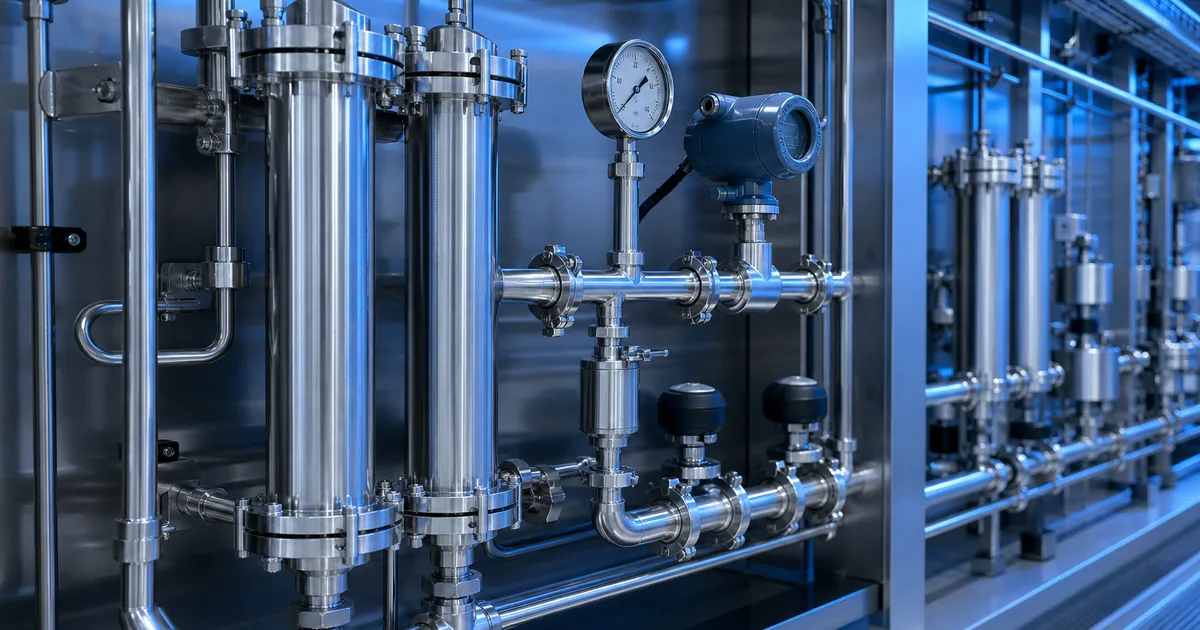
Ultrapure water pressure monitoring helps semiconductor facility teams verify flow, filter loading, membrane restriction and point-of-distribution stability in UPW systems. It is not a purity analyzer and it cannot replace resistivity, TOC, particle or microbiological monitoring, but it gives operators a practical mechanical signal for whether the loop is moving water as intended.
Why ultrapure water pressure monitoring matters in semiconductor fabs
Ultrapure water pressure monitoring is the use of local gauges, pressure transmitters and differential pressure instruments to track hydraulic conditions in semiconductor UPW production and distribution. SEMI F63 states that UPW is used extensively in semiconductor wet-processing steps, including wafer rinsing, and that purity is critical to semiconductor manufacture. Pressure instruments do not certify that purity; they help facilities maintain the mechanical conditions that allow treatment, filtration and distribution equipment to work as designed.
Useful pressure data answers practical questions: is the pre-treatment train feeding the RO/EDI stage, is a final filter loading, is a return loop restriction developing, and can technicians verify isolation before maintenance? For related instrument basics, see the differential pressure gauge selection guide and the pressure transmitter vs pressure gauge selection guide.
Review High-Purity Pressure Gauge Options ->Explore 143+ industrial gauge models→Where to place pressure and differential pressure points in a UPW loop
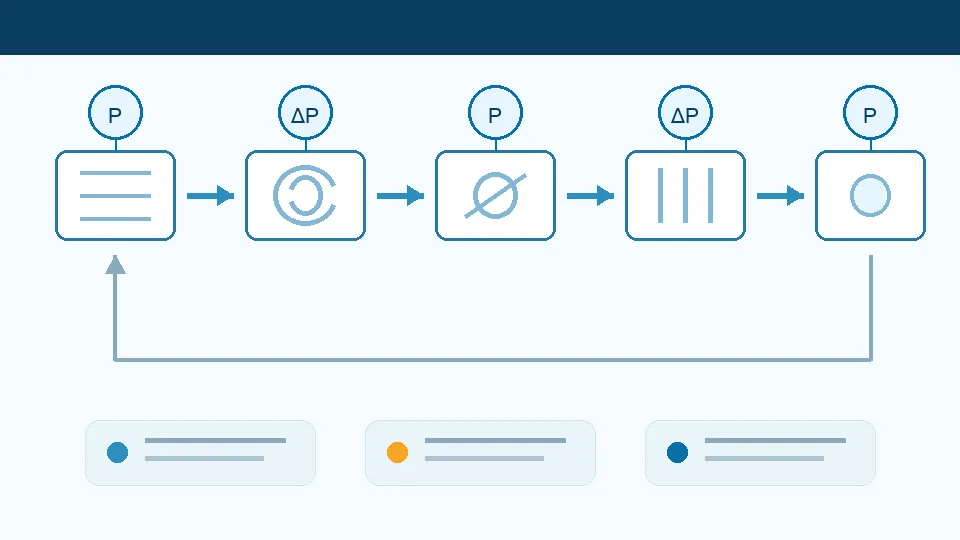
UPW systems are usually reviewed as a sequence of treatment, storage, distribution and point-of-use or point-of-distribution areas. Pressure taps should be placed where the reading supports a decision, not simply where a branch connection is easy to add. Feed pressure before pre-filters, differential pressure across RO membranes or cartridge filters, loop supply pressure and POD pressure are common high-value points.
| Location | What pressure can show | Typical instrument |
|---|---|---|
| Pre-filter inlet and outlet | Loading, blockage, pump starvation | Gauge pair or DP transmitter |
| RO / membrane stage | Flow restriction and fouling trend | Differential pressure transmitter |
| Polishing loop supply | Stable distribution pressure | Pressure transmitter plus local gauge |
| Final filter or POD | Terminal filter restriction and service need | DP gauge, DP switch or transmitter |
Choosing gauges, transmitters and UPW differential pressure instruments
A local pressure gauge gives technicians a visible reference during flushing, valve operation, cartridge replacement and isolation checks. A pressure transmitter supports alarms, trend history and facility management systems. A differential pressure instrument is usually clearer for filters and membranes because it measures the pressure loss directly instead of asking operators to compare two separate readings.
For UPW service, the instrument decision is not only analog versus digital. Review wetted material, surface finish, diaphragm design, dead volume, elastomer compatibility, cleaning method and calibration access. Avoid adding oil-filled or unapproved wetted assemblies to high-purity loops unless the plant specification explicitly allows them.
Request a UPW Instrument Point ReviewOur engineers respond within 24 hours→Materials, cleanliness and connection details for high-purity water
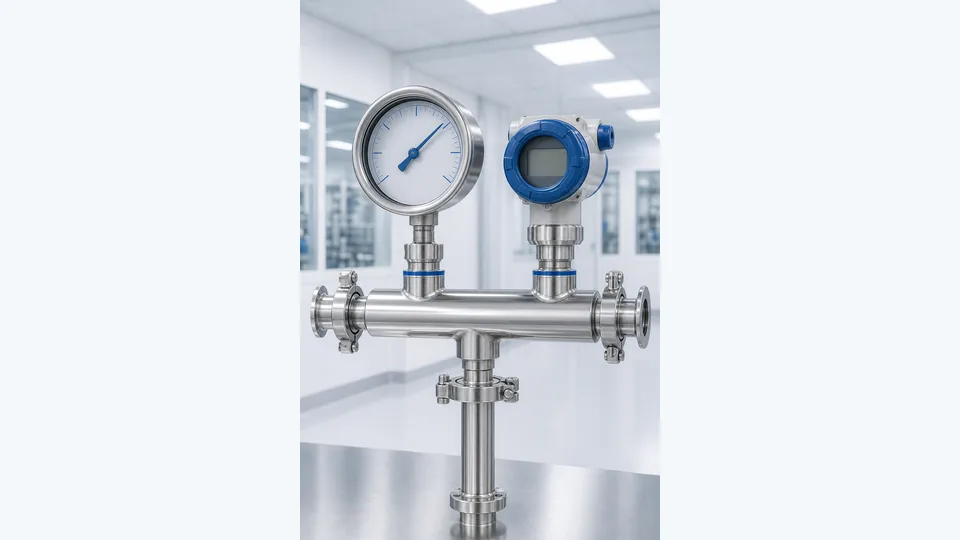
Material compatibility must be confirmed against the UPW system specification. Stainless steel, high-purity polymers, diaphragm isolation and electropolished surfaces may be required in some areas; another area may use a different approved material set. Manogauge can support pressure gauge and assembly discussions from Zhejiang manufacturing resources, but the final bill of materials must follow the fab facility specification, OEM package documentation and site quality rules.
Connections need the same care. Threaded NPT, BSP, G and metric connections are not interchangeable, and some high-purity systems avoid threaded dead legs entirely. Where a gauge is allowed, include isolation, venting or calibration provisions so technicians can remove the instrument without exposing the loop unnecessarily.
Installation and commissioning checks for reliable UPW pressure data
Installation quality decides whether the reading is useful. Keep pressure taps short and clean, avoid low points that trap particles or stagnant water, support the instrument so vibration does not load the connection, and keep transmitters protected from washdown or cable strain. In clean utility areas, verify that mounting does not create a maintenance obstruction or uncleanable pocket.
- Confirm the P&ID tag, normal pressure, design pressure and temperature.
- Match wetted materials and seals to the approved UPW specification.
- Check that calibration isolation and venting are documented.
- Commission with gradual pressurisation and leak inspection.
- Compare local gauge readings with transmitter values and record zero checks.
- Set alarms only after normal operating data is available.
For general installation practice, review pressure gauge installation best practices.
Risk boundaries before ordering semiconductor pressure instruments
Pressure monitoring cannot prove UPW purity, particle count, TOC, silica, bacteria level or wafer yield. It also cannot prove that a loop is clean enough after maintenance. It provides a mechanical signal that must be interpreted with water quality analyzers, flow data, temperature, maintenance records and fab quality procedures.
Before ordering, ask for the approved wetted material list, connection standard, pressure range, maximum temperature, cleanliness requirement, calibration method and whether the instrument is for local service, alarm, trend or interlock use. If any certification, surface finish or cleanliness requirement is not confirmed, treat it as a project review item rather than assuming a standard industrial pressure gauge is suitable. In short, ultrapure water pressure monitoring is valuable when it is specified as part of the UPW quality and maintenance system, not as a substitute for it.
Frequently asked questions
What does ultrapure water pressure monitoring prove?
It proves only hydraulic conditions such as pressure, pressure drop and possible restriction. It does not prove resistivity, TOC, particles, bacteria or wafer yield.
Where is differential pressure most useful in a semiconductor UPW system?
Across pre-filters, RO or membrane stages, final filters and POD filters because pressure drop directly shows fouling or blockage trend.
Can a standard industrial pressure gauge be used on UPW?
Only if the facility specification approves the wetted material, cleanliness, surface finish, connection and calibration method. Do not assume a general gauge is suitable.
Should UPW loops use gauges or transmitters?
Use gauges for local service checks and transmitters for alarms, trends and control systems. Many critical points use both local indication and a transmitted signal.
What should be confirmed before ordering?
Confirm pressure range, design pressure, temperature, wetted material, connection type, dead-volume limits, calibration isolation and whether any semiconductor cleanliness requirement applies.