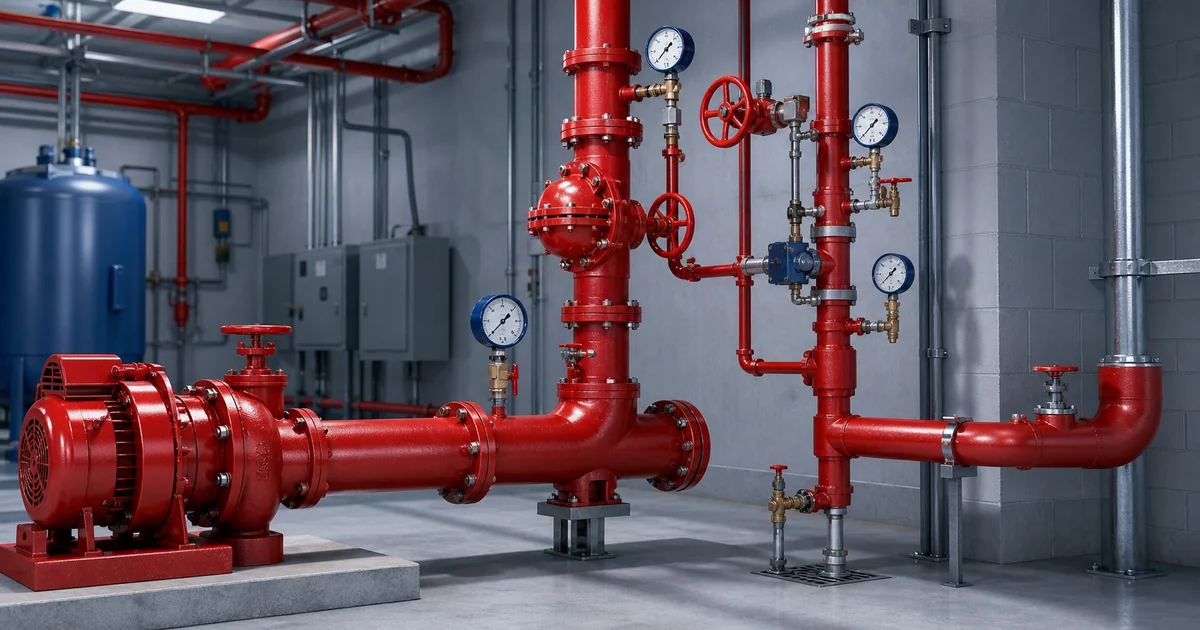
Fire sprinkler pressure gauge selection means choosing local gauges and test gauges for water-based fire protection systems so building owners and service contractors can see supply pressure, system pressure, air or nitrogen supervision and fire pump performance. This guide explains where gauges belong, how wet and dry systems differ, what range and connection data belong in an RFQ, and what a pressure reading cannot prove without inspection records and code review.
What fire sprinkler pressure gauge selection has to show
Fire sprinkler pressure gauge selection starts with the inspection question, not with the dial price. A gauge on a sprinkler riser, alarm valve, fire pump discharge or dry-pipe air side is a local indicator. It helps a technician compare today's pressure with normal building records, but it does not certify that the system will deliver the design flow during a fire.
NFPA explains in its public overview that NFPA 25 covers minimum inspection, testing and maintenance methods for water-based fire protection systems. Gauge selection should therefore support the inspection program: clear readings, correct range, visible installation date, serviceable valves and replacement or calibration decisions.
The authority having jurisdiction, fire protection engineer and local code requirements control the final specification. A catalog gauge can be appropriate only when its approval, pressure range, connection, scale units, case material and documentation match that exact sprinkler or standpipe point.
Comparar manómetros industriales ->Más de 143 modelos de manómetros industriales→Where pressure gauges are used in sprinkler and standpipe systems
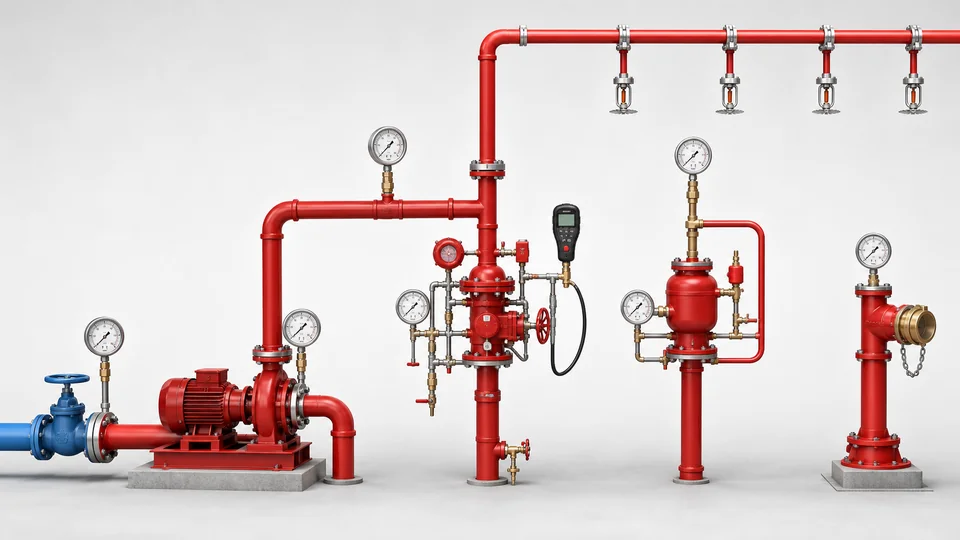
Useful gauge locations are normally tied to water supply, system pressure and supervision. Wet-pipe systems often need gauges below and above control or alarm valves so inspectors can compare supply and system pressure. Dry-pipe and preaction systems also need air or nitrogen pressure readings because supervisory pressure is part of the system condition.
| Measurement point | What the reading helps check | Selection note |
|---|---|---|
| Water supply side | Available static pressure before the system valve | Range must cover normal supply and expected surges. |
| System side of riser | Pressure retained in wet pipe or preaction piping | Dial should be readable during routine inspection. |
| Dry pipe air or nitrogen side | Supervisory pressure and leakage trend | Use a low range that resolves normal supervisory pressure. |
| Fire pump suction and discharge | Pump inlet condition and developed discharge pressure | Confirm fire pump design pressure, test header practice and vibration. |
| Standpipe or hose valve zones | Local static pressure and zone pressure reference | Final locations are code and design dependent. |
For installation fundamentals, compare Manogauge's pressure gauge installation best practices and pressure gauge overpressure protection guide.
Range, scale units and approval checks for fire sprinkler pressure gauge selection
The common purchasing mistake is treating every sprinkler gauge as a generic 0-300 psi dial. Wet systems, dry systems, high-rise zones, fire pump discharge points and hydrostatic test points can need different ranges. Put the normal reading where it can be read easily, but leave margin for municipal pressure variation, pump churn pressure, test pressure and transients.
Scale units should match the maintenance team and jurisdiction. Many export projects ask for psi plus bar or kPa. Connection size and orientation also matter: lower mount, back mount, 1/4 NPT, BSP or another thread cannot be guessed from a photo. Where a listed or approved fire sprinkler gauge is required, do not substitute a general industrial gauge unless the project reviewer accepts it in writing.
Manogauge product data includes general radial pressure gauges and stainless steel pressure gauges, but fire protection approval, dial marking, installation-date label and jurisdictional acceptance must be confirmed for the actual order.
Preparar RFQ de manómetro contra incendio ->Nuestros ingenieros responden en 24 horas→Inspection, replacement and comparison with a calibrated gauge
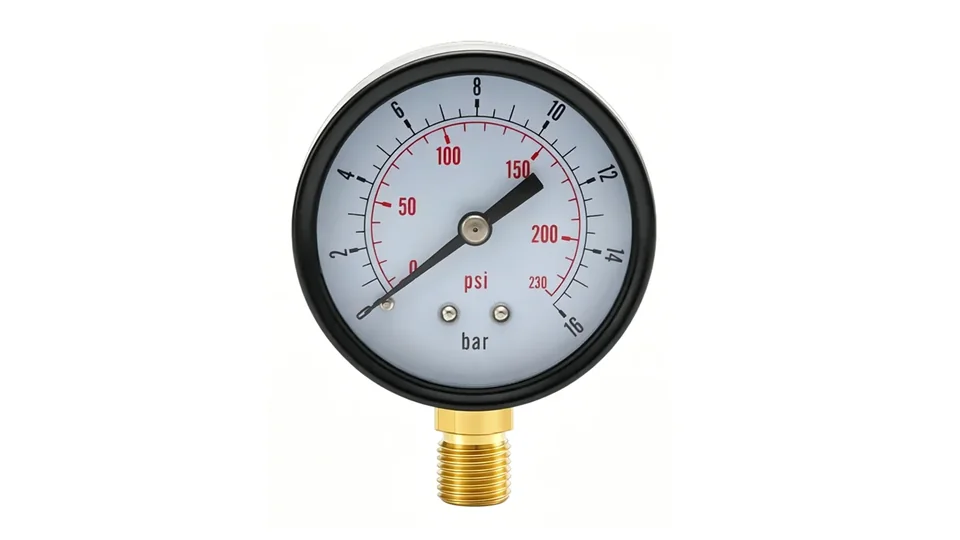
A sprinkler pressure gauge is not a lifetime component. The National Fire Sprinkler Association summarizes NFPA 25 gauge maintenance logic in its article on inspection and replacement or comparison of system gauges. The practical message for procurement is simple: make the gauge easy to inspect, date, compare and replace without disturbing the system more than necessary.
For five-year comparison or replacement programs, the gauge should have a clear installation date or service record. A shutoff or test connection arrangement may be needed so a calibrated test gauge can be connected safely. Digital test gauges can support inspection work, but permanent local indication is still usually expected at key system points.
When readings disagree, do not immediately assume the new gauge is correct. Check isolation valves, trapped air, water hammer damage, blocked ports, pointer zero shift, scale mismatch and whether the comparison gauge has current traceability. See the pressure gauge calibration traceability guide for the difference between a local indicator and a calibrated reference.
What a sprinkler pressure reading cannot prove
A normal pressure reading cannot prove that every sprinkler head is unobstructed, every valve is open, the water supply will meet hydraulic demand, or the fire pump will perform under flow. It only shows local pressure at one point and one moment. Closed gauge valves, clogged gauge sockets, frozen auxiliary drains, air pockets, pressure reducing valves and altered building demand can all make a reading incomplete.
Fire sprinkler pressure gauge selection should therefore be treated as part of an inspection and maintenance system, not as a replacement for it. Final fire protection decisions require the system design drawings, inspection records, acceptance test data, hydraulic calculations, applicable NFPA edition, manufacturer instructions and AHJ requirements.
For industrial sites, corrosion and environment matter too. Outdoor pump houses, coastal buildings, chemical plants and humid basements may justify stainless cases, weather-resistant windows or different wetted parts. For freezing areas, the system type and drain program are more important than the gauge material alone.
RFQ checklist for fire sprinkler pressure gauges
A useful RFQ should state the system type, measuring point, normal pressure, maximum expected pressure, required scale units, connection thread, mount orientation, dial size, case material, wetted material, approval or listing requirement, date label need, quantity, inspection policy and certificate requirement. Also state whether the gauge is permanent local indication or a portable test reference.
- Identify wet pipe, dry pipe, preaction, deluge, fire pump, standpipe or test header service.
- List normal and maximum pressure in psi, bar, MPa or kPa.
- Confirm whether local code requires a listed fire sprinkler gauge or specific dial marking.
- State environmental exposure: indoor riser room, outdoor pump house, marine air, washdown or freezing risk.
- Ask the manufacturer to confirm exact model, range, thread, material, labeling and documentation before shipment.
Manogauge, based in Zhejiang, China, can support pressure gauge sourcing for OEM and export projects, but the final fire sprinkler pressure gauge selection must be approved by the responsible fire protection professional and local authority.
Key takeaways
- Fire sprinkler pressure gauge selection depends on the exact measuring point: wet pipe, dry pipe, fire pump, standpipe or test connection.
- Range, approval or listing requirement, thread, scale units and date marking should be confirmed before purchase.
- A normal gauge reading supports inspection, but it does not prove flow capacity, valve status or code compliance by itself.
Related products
- General Pressure Gauge - Radial (ZX-08-R) — 0–40 MPa
- Stainless Steel Pressure Gauge - Radial (ZX-01-R) — 0–100 MPa
Часто задаваемые вопросы
What pressure range is common for fire sprinkler pressure gauges?
Many wet sprinkler systems use gauges around 0-300 psi, but there is no universal range. Dry-pipe air gauges, high-rise zones, fire pump discharge and hydrostatic test points may need different ranges selected from design pressure and local requirements.
Can a standard industrial gauge be used on a sprinkler system?
Only if the authority having jurisdiction and project specification allow it. Many fire protection systems require listed, approved or specially marked gauges, so approval status must be confirmed before substitution.
Where should gauges be installed on a wet pipe sprinkler riser?
Common points are the water supply side and the system side of the riser or alarm valve. Exact locations depend on the adopted code, system design and inspection practice.
How often should sprinkler pressure gauges be replaced or tested?
NFPA 25 programs commonly include periodic inspection plus replacement or comparison with a calibrated gauge at defined intervals. Use the adopted edition and local AHJ instructions for the actual schedule.
What information should be in a fire sprinkler gauge RFQ?
Include system type, measuring point, normal and maximum pressure, units, thread, mount orientation, dial size, approval requirement, date label, environment and certificate needs.